

 Amazon Music
 iHeartRadio
 Apple Podcasts
 Spotify
 Pandora
 YouTube
 Believing in the Next Generation - Augustine Mendoza | Faithly Podcast
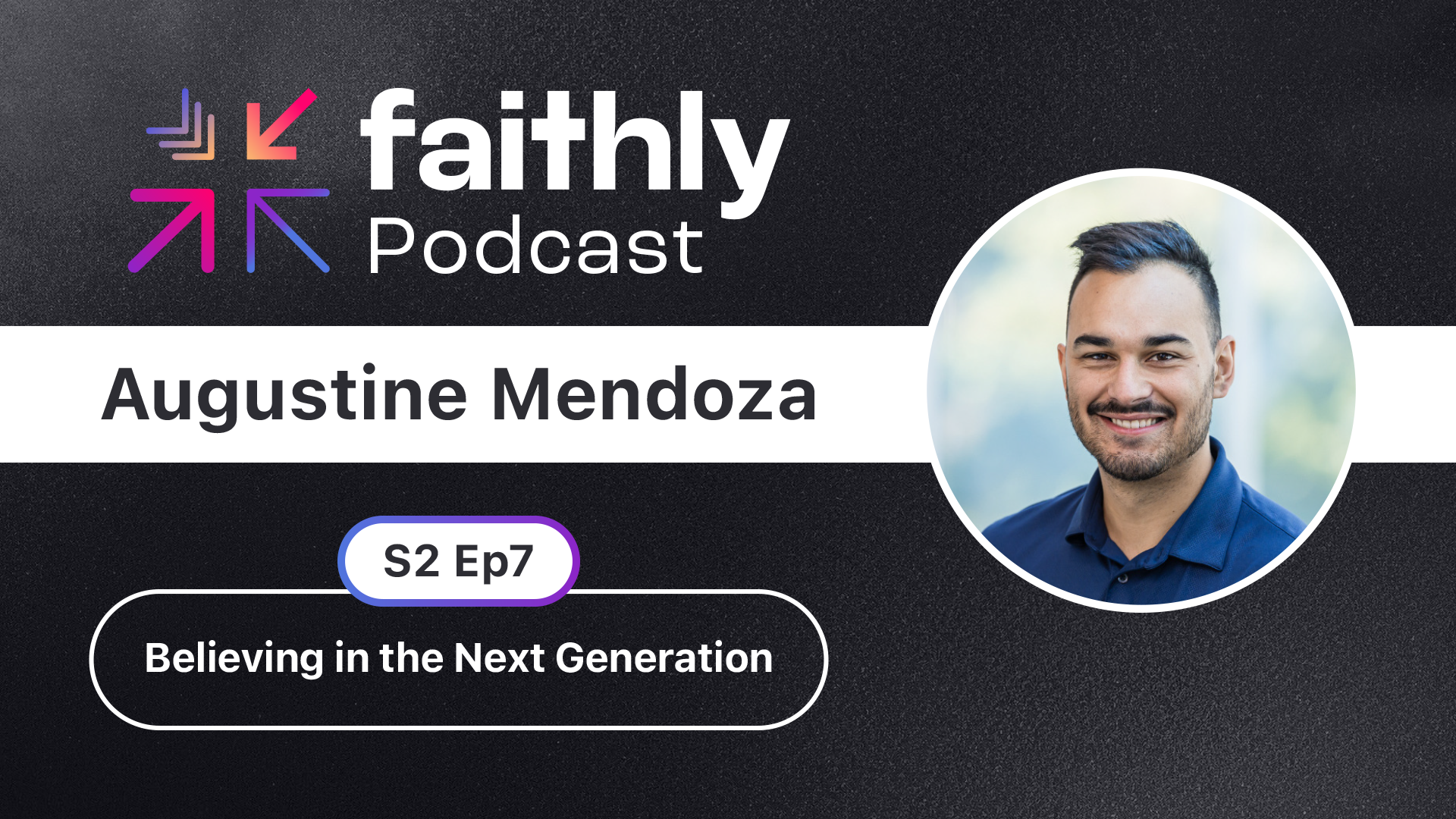
What does Gen Z really want from faith and from the Church? In this episode of the Faithly Podcast, Augustine Mendoza of Oral Roberts University joins Alicia Lee for a timely conversation to explore how this rising generation is navigating identity and discipleship in a digitally saturated world.
As both an ORU alum and Senior Director of Spiritual Life & Student Experience, Augustine brings a rare full-circle perspective having wrestled through his own questions of faith and now walking alongside students doing the same. Tune in as Alicia and Augustine unpack the tension shaping Gen Z: deeply spiritual and equally as skeptical, hungry for authentic encounters with God while wary of performative Christianity and institutional inconsistency. Augustine challenges leaders to look past stereotypes and instead recognize the boldness and honesty of this generation as signs of untamed calling that require discipleship rather than dismissal.
From social media’s global influence to the local church’s opportunity for relational leadership, today’s conversation offers a hopeful reframing, that the Church doesn’t just need to reach Gen Z, it needs Gen Z’s involvement along with their hunger for authentic community, which may be exactly what re-centers the Church on Christ-like formation.
Website: https://oru.edu/
(00:00) Authentic Worship Over Gimmicks
(05:30) From a 10-Year Plan to Purpose-Driven Flexibility
(13:09) Spiritually Hungry but Needing Biblical Depth
(21:00) Turnoffs for Gen Z in Church & Leadership
(34:27) Worship & Spiritual Practices That Resonate with Gen Z
(39:50) What Gen Z Wants in a Local Church
(44:21) The Church Needs Gen Z
Follow us on social media:
Website: https://faithly.co/
Facebook: https://www.facebook.com/thefaithlyco/
Instagram: https://www.instagram.com/faithly.co/
LinkedIn: https://www.linkedin.com/company/faithly/
X: https://x.com/faithlyco
You're not going to get them through gimmicks. You're not going to make them stay because you spend a lot of money on your sound system Like you're going to get them to stay because like, man, this is authentic worship. This is real This is the faithly podcast Hello, I am joined on the podcast by Augustine Mendoza from Oral Roberts University. Welcome Augustine Hey, thanks for having me. Super glad to be here. It's great to have you here. So Augustine, he spends his days walking alongside Gen Z this generation that has grown up online They value authenticity and they are asking deep questions about faith and about calling and Augustine as the senior director of spiritual life and student experience He's helping students to discover who they are and how God is calling them to make an impact So Augustine, maybe we can start with this question You are both an alum and now a senior staff member at ORU. What has that full circle journey been like for you? Yeah, it's it's sweet to see a place that's poured so much into me as my undergrad and my master's degrees are from here And then be able to pour back into the same place I really grew up and matured and wrestled through hard things hard questions and faith and life and culture and career While being a student And so now getting to be a staff member and help walk people through those same types of questions Is an honor honestly and I think Working with college students young adults really that 18 to 25-year-old range They're making big decisions like big life decisions And I know I made a lot of big life decisions about what to major in and what was my career path going to be and I'm interested in dating this person I'm interested in marrying this person like you're making big life choices And so I think it's really important that especially in a Christian higher education institution That we come alongside young people as guides not necessarily telling them exactly what to do when to do it But being a guide a resource someone to externalize with So a lot of people have done that for me. So getting to do that now for students on a staff member capacity is really awesome That's so great when you think back to those college years What were some of the biggest questions that you remember asking and grappling with about faith and calling? Hmm Probably the biggest I would say one for faith and one for more of a calling thing for faith Um, do I really know what I believe? Uh, I think a lot of Christians Uh, come to a university with a Christian or or not a Christian institution And they really have to answer questions about their own faith not their parents faith not the churches faith that they come from not their pastors faith But their faith Um, what do I believe about a lot of Contemporary issues in our society and our culture um, how do they intersect with theology with denominations with the Bible and where does that all meet and where am I in the middle of all that um So I mean, I probably every pop culture Uh, or current culture issue or conversation like I wrestled with I dealt with if I did in the context of community and with pastors and leaders in classrooms and outside the classroom Um, so I think wrestling through What does my personal theology look like and where does it come from not just what do I believe but why do I believe it? I think that's like a really big thing that I wrestled through that I helped other young people wrestle through Um, and then calling I think is a lot more what I would say is external. So uh, what am I called to do like what is God put in my heart? Uh, what causes me passion what causes me maybe grief or conviction it stirs me to want to be a part of finding a solution Or being a part of a movement or something that God is doing in the fields of medicine or business or engineering or Ministry education. There's so many different ways you can go about it Um, so I love being in a university university context because Uh, a lot of people helped me explore my calling and my understanding of what my vocation was going to be Upon graduation and now I get to do that for others, you know, and the cool thing about Gen Z is they hate being put in a box So they don't want to be anywhere stereotyped put in any type of type parameter Uh, so a lot of them are like I want to be in business But I also want to do social media, but I also want to do ministry and I sing and I paint so I want to do all that It's like great. We're gonna help you walk through how do you find what things are just hobbies and fun and other things That you could make a living off of and maybe you'll start in business, but then you'll end up in art I don't know there's so many different ways that people can go so I love that just helping people explore the world of What could be? Well, I love that little glimpse into how Gen Z things and how you have conversations about it because When we were growing up and we were struggling with these questions um, we were looking for a box to step into Like we wouldn't have struggled with that kind of a construct we were like sort of pick a path Um, but I love that conversation now Back when you were a student at ORU if someone had told you that this would be your vocation Would you have been surprised like is this the box that you had picked for yourself? Definitely not I was the millennial who had a very strong idea of my career path Upon graduation graduated Day of 22 and was like here's what I'm gonna do and I had a tenure basically ministry plan in my head Because growing up that was something I was taught was like have a plan and have like what's your tenure plan? You know what what are your tenure goals? And I was really excited about that. I really liked that and for me I Learned that a lot of what I said Came from a heart where I wanted to do a certain type of ministry But I kind of put myself in maybe even God in a box of like then this is how he's gonna do it Instead of saying I know what my passion is I know what my skills are. I know what I'm really passionate about doing But however you want to manifest that in a career Lord like I'm cool with that Instead of saying that I was like and it's gonna be this direction in this youth ministry and this church and it's gonna be this way And the Lord had really had to blow that up and say like actually. That's not what I've called you to You're right. I've called you to this desire and passion in your heart But it's gonna look different than you think and so I'm really glad I had that experience because I've been able to talk to a lot of Students now about that and basically say like hey, it's cool to have a plan But let's talk more about purpose and passion because that will come in a lot of different forms Not just in your 20s in your 30s But your 40s and your 50s in your 60s So to have a life plan and say well, I'm gonna work at this job for 40 years We just see in trends right now. That's probably not gonna be your path There's some people for sure. You might be in the certain business for 40 years and become the CEO and that's great But most people are gonna be in a lot of different spaces and so I have a little bit of experience in that now So I can definitely help guide students in that way. It's so great to see how God has used you and your path and your passion and your purpose So the questions that Gen Z are asking today about faith and about calling how have those changed since you were a student on campus Hmm, I would say they've changed Because of globalization and I would say social media which are pretty much linked but globalization because uh You can talk to someone or hear from someone or see a news update from somewhere in the world that is not your Home address So because of that we're hyper aware even just if you just said the news you're more hyper aware of what's going on globally So it influences how you think about faith how you think about culture and career because no longer are you thinking After college, I'm gonna go back to my hometown and just work at this business that my dad owns And I'm gonna do that for the rest of my life and then I'll have a family and again Some people may say that the vast majority are thinking where can I go? What can I do? I want to be a part of something global and big and movement and I think that's changed a little bit from the millennial Generation a little bit and what's helped with that as well is the social media So the rise of social media and how tiktok instagram X really just changed perception of dialogue So dialogue about faith culture career calling It moved online So I think a lot of it for the millennials was in person in groups in conferences and churches in coffee shops and now Way more dialogue is happening online and I think most trends we're looking at are like It's probably not the best way to have a conversation The comment section usually turns into arguments and debates rather than face-to-face conversations Which I think in turn again a trend would be why podcasts have become more popular because you do get a conversational tone It's not a blanket post that goes viral and then everybody starts debating on it It's a conversation you have to sit down you have to listen you have to engage you have to think So I think millennials have kind of brought podcasting back around and be like we want to have a conversation We don't want to just blast things up there for likes or for reshairs or all that So I think that's really what's changed how we have dialogue I think a lot of the questions are the same about faith about culture About calling but how we're having them has greatly changed from when I was in school to now 10 plus years later Seeing how students engage in hard conversations They'll still have hard conversations or really wrestle through culture things in smaller groups of friends But in general they're being fed Dialogues monologues information via social via digital and then trying to Take that in and then figure out if they can even talk about it And that's the politics that's the faith that's the career that that's that's all areas Really interesting I want to go back to a comment you said about this generation they see things in a very global way Right like they are trying to figure out how to get out there and like they think very global and they think scale As a millennial do you ever feel tempted to like tamp that down and like go back to your 10 year plan roots and sort of say like you know be practical and you know, what's realistic Yeah, it's it's a delicate balance. I would say with young people Because I was I was the same way you know I'd be dreams and I did have plans and all that and then other people were way more practical and I think There's there's benefit to practicality, but there's also benefit to passion I know people that are really practical that really don't like their life because they made the really practical decision They're making good money. They're in a good job like maybe they have family, but it's a pretty mundane life And they they know they chose it for themselves Whereas other people they're passionate and they're out there and you're like whoa like how are you going to pay for bills Like is that going to really going to work out or and I hear my my parents and probably many parents in generations be like You need to make a steady job like you need to provide like you need to make sure you can support yourself What about insurance like all of these really practical questions good questions And I think you need to balance that with but what What would you do if if you got all of your living expenses paid for But you weren't going to make a big paycheck like what would you do like if if everything basic was covered But you were never going to be wealthy. You're just going to be Living and you're good like standard What would you do for the rest of your life if you could and I think that Gen Z's really tapping into their passion right now um And so I think on my side I am more of the practical help for them in a lot of the conversations and guides But then like I said there's some students that are really practical and I'm like so do are you passionate about this like you really want to do this Uh, why are you doing this and like making sure the passions there so I think the the power move for Gen Z is when you put passion in practicality And they get both they they are going to change the world they are going to make a difference in their sphere of um calling and career But it is emerging of both and maybe millennia as we were similar we needed a bit of both But I would say Gen Z right now that the Gen Z students that I'm around Passion is not an issue. They they are definitely sensing Calling and excitement about the future. I love that and I love a good alliteration The power move for Gen Z is that passion and that practicality coming together. I love it I didn't even try it just came back Well, so you spend every day walking alongside Gen Z right? What about how would you describe this generation spiritually? What's unique about how they're approaching faith From my vantage point which again is mostly um Christian Gen Z students um beyond a Christian campus I work with Gen Z globally in different areas, but a lot of them being from predominantly Christian um atmospheres Uh lots of hunger. I think more hunger than millennials did as college students that were millennials hunger for truth hunger for Experience in worship and in prayer hungry to be around the things with God um that are um uplifting and and positive and Praise like when when they're having a good time like they want to have a good time with friends They want to have a good time and worship they want to engage and I think The tie that I've kind of sensed from that is because they grew up as digital natives uh Bombarded by information bombarded by Negativity bombarded by common sections that make you feel worse after reading it like they and being very inage conscious as well Coming into the presence of God experienced in the power of God um engaging with people in prayer serving On emissions or like maybe a local context Doing something real to them um and engaging their senses in it has been a powerful way to feed that hunger And I've seen with our students the more they experience that The more they open up the more they really feel alive the more they're eager to pursue education and the calling and and relationships and so Um, I've experienced that encounter Uh mixed with Engagement really is the best way for Gen Z to fan the flame of what God wants to do in their own hearts and their own generation So I've experienced a lot of hunger on the flip side I've also seen and this is the the contrast right the the the balance of uh biblical eliteration is really high Uh with Gen Z so statistically Gen Z is purchasing more bibles and has access to the word apps social media um more than ever before But I think because they've been so immersed in just it being around the depth isn't necessarily there And again, I'm speaking generalizations for Gen Z but uh one of my big Responsibilities I feel working with Gen Z Is as they discuss things in culture, career, faith, all these things politics Um going to the word of God and really helping them engage with the word of God with their belief Um with what the tiktokers said and what the word says And and what they heard in their favorite politics podcast and what the word says and like really trying to marry and Help them understand that scripture should inform our views on all things rather than Culture politics or whatever we're passionate about fuel how we read the Bible and there's a there's a big difference in how you Use the Bible in that context um I was just watching the U version celebration last night we they hit over one billion downloads for the app Which is crazy is just down the road in Oklahoma city like an hour and a half away So I was live streaming and watching it and just thinking and and they were talking about how the word goes forth And the word has gone forth and Gen Z has access to the word But just because you have access doesn't mean you study it you meditate on it you go deep in it And so I've really challenged our students to not be cliche Christians Or to throw the verse on the phrase that you want to just affirm in yourself. I did this. I voted this way I chose this path. I am dating this person and I'm throwing a scripture on it to just Make me feel better as a Christian about it But really like what does that scripture mean and was it supposed to be used in that context and really go deeper in that So I think that's where my theology and Bible training for my degrees is really helpful Is just helping them learn how to navigate that in depth. So hunger, passion I see in the generation But also a need for truth to really get into the word of God in a deeper way That's so good. That's so good And I'm glad you mentioned the U version celebration and the billion installs of the Bible Um crazy digital has done so much for the consumption of the word and the availability of the word um But also print Bibles have been selling at record numbers as well I'm curious for students that um, you're walking along side when they reach for the word are they doing it on their phones Or do they have physical Bibles or is it a does it depend on what situation and they're in I'd say it's a good mixture. I think some um, um, I would say those that I'm seeing really get into the word more Are using a physical Bible I myself love a physical Bible because I can put my phone face down And there's no notifications coming on, you know, I can just get immersed in a physical book and also I think Gen Z is also very artistic in general Uh, even events we do on campus. They always want something artsy to do at it um Something some craft or or something to paint or chalk and so I think having a physical Bible with Highlighters and pens and annotating and and writing pictures in your Bible like it helps them engage with scripture And I've seen a lot of our students do that. So I have seen that thought about Bible sales being on the rise And I think that's awesome I actually think that will cause Gen Z to go more in the word in depth because they'll have something physical Something tangible that they can kind of touch and make their own and personalize and I think that's that's really good Super interesting. Okay, so I've heard it said about Gen Z I want to test this with you I've heard that they are both deeply spiritual as well as deeply skeptical And maybe that comes from this like barrage of information coming at them in digital But um, I'm just curious if you've seen if you've seen that tension on campus Definitely. Yeah, um, in fact, our last chapel our speaker talked about the rise of cynicism in the church especially especially the western church and Just talked about the idea of like hey, we can't be cynics and receive truth at the same time Um, and I think it's come from church. I think it's come from Man, a lot of viewpoints being blasted via your social media all the time and I don't know what to believe I like this pastor and I like this pastor like this pastor But they're all saying different things about the same situation. Ah, I'm overwhelmed I don't I don't know how to like process that so you become cynical or you like disassociate So even things that have happened this year culturally politically in the US we see two different Responses you dive head first into it and it gets really messy Or you completely back out and be like I want nothing to do with this because it's messy So you either dive into the mess or you like don't want anything to do with the mess And I I think Gen Z just based on where they are on their season of maturity like they're not really sure which one to do And it's very case by case so I have seen a rise of um spiritual hunger and and I would say spiritual is a good word because um witchcraft crystals new age all these things are also on the rise um You go on tiktok feeds with Gen Z and like that's on their feet and so they're looking at that they're listening to that And they're trying to discern I have a spiritual hunger for something outside of my normal But that can come in a lot of different ways and so um I see Gen Z is very open to the gospel But they're also very open to a lot of religious belief Which I think is a great opportunity for all Christian leaders regardless of where you are If you have a Gen Z person coming in they're probably spiritually hungry They're probably looking for something deeper than their job So I told a group of leaders the other day I was like you could be in an engineering field or a business field or a medical Field doesn't matter if you have a Gen Z person man It is not hard to get them to open up about those kind of things Ask them about what's on their tiktok feed Ask them what they think about something in culture and they will They will start going and it just will tell you so much So I don't have a hunger problem here on campus. There's plenty of that But like you said, I think it's navigating that without cynicism With maturity and trying to go into conversations and not feel offended or bitter or resistant But really go into it with seeking to understand rather than being understood And that that's a hard lesson to learn for I think any young person in any generation But with Gen Z, I think that's that's hard because of all them Bambardments they get yeah absolutely. I think we can all relate to that too, right? Well, so here's something I know must be a ministry leader's minds is there listening to what are the turnoffs for Gen Z Like what is it that like like sets off those like alarm bells that makes them Suspicious or sort of stay away from something So that's a great question We talked about one already. I would say putting them in a box. Yeah, and putting them in a corner. Yeah, they're not meant for Do this and then go home Kind of jobs or atmospheres. They want to be immersed. They want to have other opportunities My students like I have student workers giving them a job and they have a description And I want to make sure they do that but I'll often give them outlets things outside of their job description And they want that so like hey, you're doing this job But I also know you love photography would you want to come take photos at this event with us like Just unofficially just like come be a part of it Absolutely because they love photography and they're gonna jump in and they feel fulfilled Because I understand them and I think that's the second thing that Really turns up Gen Z is not just stereotypes But choosing not to be in relationship with them if you're not in a relationship with them they they won't open up They're not going to be honest. They're not going to work hard. You need relationship with them In fact, I was reading a study. I forget where I read it. It'll come to me But Gen Z actually has higher expectations of their employers and their managers Then millennials did Millennials were looking at benefits being practical work-life balance Vacation and Gen Z cares about those things to some extent But they're really looking for is does this manager actually care about me because if if you care about me like I'm probably going to run through a wall for you But if you don't care about me you can give me all the perks and benefits in the world But I go to a better place and that's what places like you know Google or Apple and you see like these like hang out zones and food It's less about the perk for Gen Z It's you care about me you you see me you hear me and that's where the individualization of Gen Z really comes in is they want to be treated like an individual Not you're one of my many staff members. You're one of my many marketing People you're one of my many event people like no you're you're special to me individualization So it turn off would be treating them just like They're a a Gen Z person And the third turn off that I know for sure Is not listening to them if you don't listen to them if you do if you shut down a Gen Z voice um They will leave and or they will not listen to you So if you want to be listened to it does take a lot of listening and so I've learned just working with students With Gen Zers Sometimes listening doesn't mean like I'm going to do what they want or I'm going to change things But hearing them out and then trying to give them a why Behind a lot of decisions a why behind a policy A why behind why they didn't get the promotion and someone else did I've had those conversations and what I've learned is when I is like a manager Overs over Gen Z um help them get understand context and perspective 90 plus percent of the time they're good after that They just they're not like millennials. I didn't get the promotion and then there's no other communication If I didn't get the promotion they're probably going to circle back and make why didn't I get it and managers Myself other millennials people can't be offended or angry like don't question authority don't question the boss What they want is to be heard really more than anything is like I've worked hard. I've done this. I did that Hey, thank you for explaining that. I hear you So these kind of conversations are really important and I've seen people who try to lead Gen Z and be like just listen to what I say I'm not here to listen to you. I'm your boss. I'm your manager. I'm your leader. I'm your pastor. Just do what I say That's an instant turn off every time. They're leaving that business. They're leaving that church Um, so creating space to listen to them. I think it's really really important Wow, thank you for that augustine We have a lot of ministry leaders who listen to this podcast who employ Gen Z at their churches and ministries right now And I can almost hear the wheels shifting in their minds right now because I think you're helping to unlock why You know the old methods of communication and employment Even you know in the church and ministry space don't really work with this generation I think you're really helping leaders to unlock something so thank you for that And can I just add one thing in there because that reminded me I've heard A lot of people call Gen Z entitled like an entitled generation like they think they deserve At 22 and they graduate that they already deserve like a mid-level position or they deserve not to have to do those things because they You know, whatever and I've heard that and I would just love to offer maybe a different perspective I do hear that and to be honest, I encounter that sometimes with students um But what I've learned is I don't think it stems from entitlement I think it just stems from a strong belief in themselves Which again you can perceive as entitlement like I deserve this But oftentimes as I've sat with young people and they've come off to me as entitled and I've been like whoa You just got here buddy like calm down What I've learned is They're so passionate. They're so hungry and they're so self-confident in a lot of these situations They don't realize how strong they're coming off and I've actually learned that if I can again listen to them and hear them out Uh help them understand the context of why I'm asking them to do certain things Um, not only do they stay loyal to me, but then I know okay This is someone that's gonna grow with the organization grow with the church So I've described it as like the Peter syndrome So the disciple Peter like bold like out there like kind of like abrasive sometimes probably goes a little too far in some instances Um, I see a lot of those in Gen Z And so what I've learned is help them see themselves in that light. Yo, you're kind of like Peter Again, this is a lot for the church leaders You're kind of like Peter like you have big calling with there's a lot of stuff on your life You're gonna do awesome things like you affirm all the things that they feel inside of themselves But hey, I just also want to warn you like Peter It can be easy to come off abrasive. It can be easy to push the envelope Learn the power of submission learn the power of humility learn the power of walking behind and learning So that when you're released to do that thing you want to do make you're gonna explode It's gonna be awesome So I've learned that as pastors and leaders like Don't dismiss it and call it pride or entitlement see it for what it is like there's there's something there There's a gifting and I it's my job as a leader to help nourish it and cultivate it and make sure it grows appropriately But just because you see it doesn't necessarily mean they're entitled maybe there's a little bit of entitlement in there Peter definitely had a little bit of entitlement in certain times But also there's a lot of purpose there and there's a lot of power there. So um, don't dismiss a Gen Z Just because they come off Really strong and obviously if you use discern and all that kind of thing But just two more cents on that. I think that's important. That is so good. Thank you Augustine. I want to switch gears for a second We've talked about oh, sorry, I just knocked my camera off off its base here, but I want to talk for a second about Creating the spaces At a place like oh are you where students are in this time of life where they're asking the big questions and making the big decisions about life How do you create those spaces that are safe for students to wrestle without an uncertainty while still being called deeper Yeah, I think it's more uh cultural than event driven Uh, we just have a culture of honesty and respect on campus We have over 140 nations of students represented on campus students from 140 different nations on campus now all 50 US states on campus so we have Americans who are voting red and blue But we also have people from outside the country like literally hundreds and hundreds and hundreds of students from outside the country who don't care About republican or democrat they actually are thinking about their politics back home or how America's Policies impact them and so even when I think about exploring the idea of Politics exploring the idea of theology Denominations even uh, you know to be a Baptist from Louisiana is very different than a Baptist from my ruby Kenya There's the very difference uh, big differences in Labels so you can call yourself Uh, a liberal in the United States, but a liberal in the UK or a liberal in Australia or a liberal in Japan very very different context So I think because of how um Ethnicly diverse we are and how diverse we are with opinions and backgrounds and denominations and Faith upbringings it actually lends itself to really say oh, I don't actually Know a whole lot because I'm surrounded by people when I say oh, this candidate is the best everyone's gonna vote for him And they're sitting next to four people from a different country who've never heard that person It's very humbling because be like this is my world and yet It's not the world. It's just your small corner of the world So I think having a culture of humility of of being learners of being able to ask questions At the beginning of every school year We host a chapel service that we call honor chapel And in honor chapel we talk about the cultural expectations of our campus And there's and there's a few things that we talk about But one of the things we talk about is we have a culture of honor for people that honor each other So when you're in class and you're debating about foreign policy or you're debating about a certain theological belief or an interpretation of a scripture We do that with honor we can disagree without disrespecting It's actually possible. I know in our world that seems crazy But like you can disagree we can have a disagreement on this podcast and we can still walk away theoretically shaking hands and being respectful and saying like hey, I respect you We can have different opinions We can see this differently and still be a brother and sister in Christ and we try to teach that so I think it's cultural So that then in the classroom in a student club or a student organization At a campus event At a forum or in an office a student with a faculty member a student with a staff member There's this general expectation that we can disagree. It's actually okay. It's actually okay to voice down It's actually okay to voice like I disagree with what you said in class great. Let's talk about it Let's have a discussion about it So I think over you does a really good job of creating that culture And I would say any leader that wants to have again Gen Z feel comfortable and feel like they can grow Um and lead they actually need that that's actually a big cultural staple for Gen Z is to have A space of comfortability a safe space if you will of culture that we can say Uh, we can voice our opinion and not get canceled We can voice our opinion and not be judged. We can voice our opinion and we can be wrong Like it's actually okay if you're wrong. It's okay to say oh, I think I messed up on that and we also have that as well As like as you have a debate you're like oh I was wrong about that. Hey, that's okay. We're all learning. We're out of university. That's really what's supposed to do We're supposed to learn so we have that built in incentive, which is nice So you call so you guys lay this out in honor chapel is that where it gets set forth and how often do you do honor chapel? Is it a one-time thing where you do it regularly We do it at the beginning of every school year so it's usually in august or september depending on the calendar And it kind of is like hey, so for the school year Here's the reminder so that your first year or you it's very like oh, this is what we're about That's your second year your third year your fourth year if you're in grad student you've heard it several times So I think by the time you graduate it's very ingrained in you like hey, this is who we are and what's great is We're all holding each other accountable. So if there's students having disagreements with students Some students gonna step. Hey guys. This isn't like who we are. This is not how we disagree. It's okay to disagree It's not how we disagree and our students are really good at like protecting that culture and we really charge them like Hey, I'm not trying to be the police for honor on campus like I hope we all are like hey, let's stand it down Like we don't need to raise our voices. I wonder we can have a civilized conversation about literally any topic And we should be able to do this Christ followers just Biblically, but yeah, we do we do it once a year and it's really helpful. I love it. I think America needs to have an honor chapel I think I would suggest it. Yes, let's suggest it. Maybe we can make it happen putting it in the suggestion box immediately Okay, so another question for you I have is about the spiritual practices and rhythms that seem to be resonating with your students on campus Is it Bible study? Is it worship services? Is it prayer meetings? I'm curious what seems to really be working with your students 100% worship Gen Z loves worship. They love music in general and worship is such an expression for them again Getting them engaged in something real not digital getting them engaged in their senses standing kneeling sitting laying hands raised They they don't really care about light smoke graphics. It's nice like they can appreciate it But they actually really love stripped down basics. They really really don't care about it being crazy our best At most Popular, I guess you could say worship times on campus are or when it's not mainstream when it's not We have all the best lyrics on the stage and in lights and smoke machine going and digital effects like actually it's best when it's like pretty casual environment we have a prayer room on campus that goes from Tuesday through Friday nights student-led prayer and worship small room probably capacity of 80 maybe maybe a hundred in there And it's full every night six to midnight because students are coming not for a show They just want to engage they want to pray they want a worship and it's a very engaging thing So I would say worship and prayer For Gen Z pretty much globally. I mean if you look at South Korea or the revival that's happening in the UK right now Or really just in Europe in general like a lot of it is worship based. I'm engaging Gen Z in the place of worship And then out of that I think there's some great practices that are coming out of it I said I look at guys like John Mark Comer pulling on elements of Dallas Willard and those like that We were kind of revitalizing this call to Sabbath to disciplines to Contentment to basically this I want to call it a minimalist theology, but basically Going back to the core basics of spiritual disciplines and saying like yeah We should be those that open scripture. We should be those that Sabbath. We should be those that Don't have to look at social media all day. It's okay to have a screen-limit time and and seeing those as spiritual practices Not just says like oh, it's good for mental health. It is good for mental health, but spiritually. I've seen that the practices of even communion Confession gathering They're starting to rise but for dominant worship and prayer and then I think there's it's feeding into a lot of spiritual practices Underneath Super interesting So when people think of college campuses, Augustine there are often I think thinking of the stories that we're hearing right now at some of like the big state schools where You know, there are these big revival concerts like kids getting baptized like becoming followers of Christ for the first time Yeah, you're here at ORU. It's a Christian college, right? So the the kids who are coming are Christian and presumably already baptized Right, but I'm curious to hear from you like what are some of the Milestones for a Christian college that you think of like in terms of life transformation if they already are Christians Yeah, that's good question. I think it's more of a discipleship mentality We obviously have students that come that are A Christian by name, but not by lifestyle. So then they have transformation and in that discipleship process But we also have people coming Again, we we've learned not to assume pretty much about anything in the Christian world You can say your Christian. What does that mean? And hey, you say you're from this denomination. What does that mean to you? Because even students we have students that come that have never been baptized, but they've followed Christ of a life They just never thought baptism was important So we have conversations like is baptism important? Like should should we be baptized and depending on your face to nomination background? Like summer like I'm sure they want to and other people like it's essential for your face So we have people coming from all streams We have people coming with different Understanding is a relationship with the Holy Spirit some from Pentecostal Charismatic circles some from Baptist evangelical and they have different These on the Holy Spirit. So again, I think the discipleship process is saying okay, you're on this Continuum of growth with Christ and and if the goal is Christ's likeness where are you in that journey? So you could be full of the Holy Spirit operating in the gifts and like you love worship and you will love all that But your lifestyle outside of the building it doesn't match What's inside the building, you know, and and so we're walking without person worth your lifestyle And other people man, they're living right. They're doing all that kind of stuff But they don't actually love to live for God. They just want to be a good person. They want to have good family and like they just want to live a good American Christianity white picket fence have a good life Hey, that's good too, but like I think there's probably more depth for you there Or there's some people that just come as Christians and they say they're Christian And it's an excuse to do what they want and so there's all sorts of On the continuum of like if a hundred is I'm a hundred percent like Christ and zero is I'm not a Christian We got people all along the different realms and so our staff in fact the team what we do is you say Let's figure out where the student is and let's move them forward into Christ's likeness whatever that means for them But again, I think that's why Gen Z is so cool because they are so individualized That it's pretty easy to find out where they are because they're not thinking groupthink They're not like millennials where it's like well, it's just me and my friends and we all believe the same thing It's like no Gen Z believes things very differently and has different convictions and so it's actually really easy to figure out where they are in the continuum of Christ's likeness And then I think she's going to scripture and being like okay, so where do you need to become more like Christ and it's Again, not usually too hard to figure out and it's just walking with them in that journey So in the two to four years that they're here on campus We we're not going to get them to a hundred and we know that like the son our job They have a lifetime of pursuing Jesus But if we take them from a five to a 15 or from a 15 to 20 or a 20 to 50 like great We're going to help them as hungry as they are as open as they are as willing as they are We're here to be guides and support for them So great Well, so I think you've touched on this a little bit, but as Gen Z graduates from college and They are looking for a church in their new town or city What do you think they're going to be looking for in a church and from their church leaders? I think the first thing that I my team and I really Trying to encourage greatly is engagement with the local church um a lot of Gen Z Feels like they might not need a local church uh I think they look at some of the stuff in the church and they say it's messy. They don't do anything with it or It's too big. It's too small. It's not for me And there's a lot of excuses that come with that and I think the only else it's similar, but I would say Gen Z's um It's going to be interesting to see what Gen Z does with quote-unquote the local church over the next decade or so um They're going to really push the envelope for what the local church Should look like in their opinion in their eyes and so I think there'll be some interesting dynamics with millennials And maybe even the older generation with Gen Z coming into the church on staff in leadership pushing the envelope Because a lot of them they're perfectly content if once a week they met up with 20 of their friends around a fire and worship in their living room And they would call that church and I think even talking about, you know, what is a church um Why does a church exist um a lot of the conversations you may have heard this uh we are the church We don't need to have a pastor. We don't need to have a building. We don't need to have ministries We are at the church. We're just going to do life together. We're going to go back to the original acts Where we just gather and we pray and worship and we fast and we give everything to one another And I think it's like a good spirit that Gen Z has But I think uh, they're still the necessity of um Format and structure and accountability of a church body um and also having multi-generational. I think it's really important But all that said how they will impact those churches as they go into these places is they're going to be looking for that kind of Authentic Christianity in their mind. So no you're not going to get them through gimmicks You're not going to make them stay because you spend a lot of money on your sound system Like you're going to get them to stay because like man. This is authentic worship. This is real um the pastor is willing to get off the stage and talk to me and have relationship with me. It's not a VIP pastor Uh, and so they're looking for that authentic stuff and I hear that a lot from Gen Z And so I think as pastors and leaders are accepting Gen Z into their churches, especially after they graduate They're going to be looking for authenticity and I know that word is probably overused a lot But truly authentic worship authentic prayer authentic community not force not stage no agendas just We're going to worship and we're not going to have our three song set list and move on with the service We're going to take our time. Hey if the pastor wants to go a little bit long because it's got authentic overflow Great. If ministry time's going to go long great because it's authentic. They don't want the Give me one hour because I want to go like they're they're not like that. They're going to they want to take their time So that's my perspective on it again. That's a pretty big generalization for Gen Z But just for the students that I see I love what you said To me what I hear from what you said is that the church really needs Gen Z That they will ask the questions and they will Bring the perspective that can help churches be the axe to church again That I think we all want to be make the church the church. I think it'll be a great thing They need the church and the church needs Gen Z 100% and and I've told students and I've tried to coach them on this because again that Peter Thing is real especially going into a local church you're called the ministry going to local church and you think like I'm gonna Change this whole church because I'm here the 22 year old who just graduated and teaching them humility And I think one of the things I've encouraged them to do which I would say if you're a pastor a leader right now Be prepared because even if I didn't encourage this they're coming and they're gonna ask why Yeah, and if you can't give a why Gen Z is gonna have a really hard time with that. So hey, why do we only do three songs in worship? And if the honest answer from a pastor is well because we're trying to keep it tight We're trying to keep it short or I want more time to preach or whatever they're honest answer is they can come up with some fluff answer But Gen Z is gonna look at it and be like it's because you want church to be one hour That's why like they're they're gonna interpret that yeah, and they're gonna deem that as you're not really authentic then you're just you're on a time You're this is a this is a professional church. This is a uh High corporation, you know what I mean? And and they like mega churches so they're not necessarily against it But I think they want to know the real why behind everything and if you can't give them a why they're gonna get frustrated Or if you give them the fake why they're gonna see you right through it because again There's way more famous pastors than you there's churches that do things better than you they can just look online They can go on social media they can watch church online like so the production value has zero Value to them engagement and authenticity has 100% of the value for them So don't try to impress Gen Z and don't try to fluff them like honestly just be authentic be honest with them Yeah, that's really really good advice. All right, I'm gonna leave it here with one final question for you Augustine What is giving you the most hope about the next generation of Christian leaders that are rising up right now? I I think about first Timothy 412 or Paul tells Timothy don't let anyone look down on you because you're young But setting an example for all believers through faith speech conduct love purity And I see a generation that wants to do that. They want to set the example for all believers not just their peers Not just those they're younger than them. They want to set an example for the world And I think it's easy to get cynical in ministry if you're a pastor or a leader and you have been leading for a while Trust me. I know for my 10 years of doing this like you get burned Things are hard People leave young people do things that are hurtful to you. So it's easy to become cynical towards the next generation But my prayer and and what what gives me hope for it is You know, Paul tells somebody don't let anyone look down on you I don't want to look down on young people like I want to believe in them And I think if you look at the heart of Jesus It's he's very passionate about young people the disciples were for young people most likely teenagers are going into their 20s He looks at children says let the little children come to me don't turn them away from me The example of Jesus is I believe in young people and so if that's Jesus saying I believe in young people enough He didn't pick Pharisees who've been in ministry for 40 years and said you be my disciples. He'd take Nobody's he picked zealots. He picked tax collectors. He picked Peter and he said hey, I want you guys the rough around the edges the those that Probably aren't educated enough probably don't have as much experience or excellence or discernment or wisdom as some of the Pharisees or some of the the Roman leaders I could have picked better better people But he went with young people and so I think that just sets an example for the church For anyone if you're in business or engineering or nursing don't look down on young people Um, they're called to set an example. That's what scripture says So we as an older generation. How can we help them set the example? How can we promote them up not just in position But in opportunity how do we put them up and say hey, I believe in you and I think all of us if we were honest This also keeps me with hope is there was someone who believed in me and put me in position as a 22 year old Who gave me opportunities that I'm like, wow, why are you giving that to me because someone believed in me And I think when someone believes in Gen Z They will run through a wall for you like they will go and do things that maybe a lot of your other staff wouldn't do Because they've gotten tired. They've gotten older. They've They've slowed down in their pace of what they like to run Gen Z is ready to run So don't try to Settle them and hold them back like let them run let them do what they're called to do give them wisdom show them the past like You know critique them when you need to critique critique them correct them when you need to correct them but let it be fueled by belief and hope not in cynicism or doubt Jesus doesn't doubt them Jesus isn't cynical towards the next generation. So I don't want to be either So good. Thank you Augustine. This has been a master class for anyone who is looking to mentor or Employee or even just welcome Gen Z into their church their community their ministries their workplaces Thank you. Thank you for this insight. It's been incredibly helpful to me and I know to all the leaders who are listening out there Absolutely thanks for having me and I just want to encourage all ministry and church leaders out there like God's doing something you get to be a part of it Um, and let's welcome Gen Z into it. They're they're awesome. They're not perfect, but they're awesome So good so good. Thank you Augustine You