

 Amazon Music
 iHeartRadio
 Apple Podcasts
 Spotify
 Pandora
 YouTube
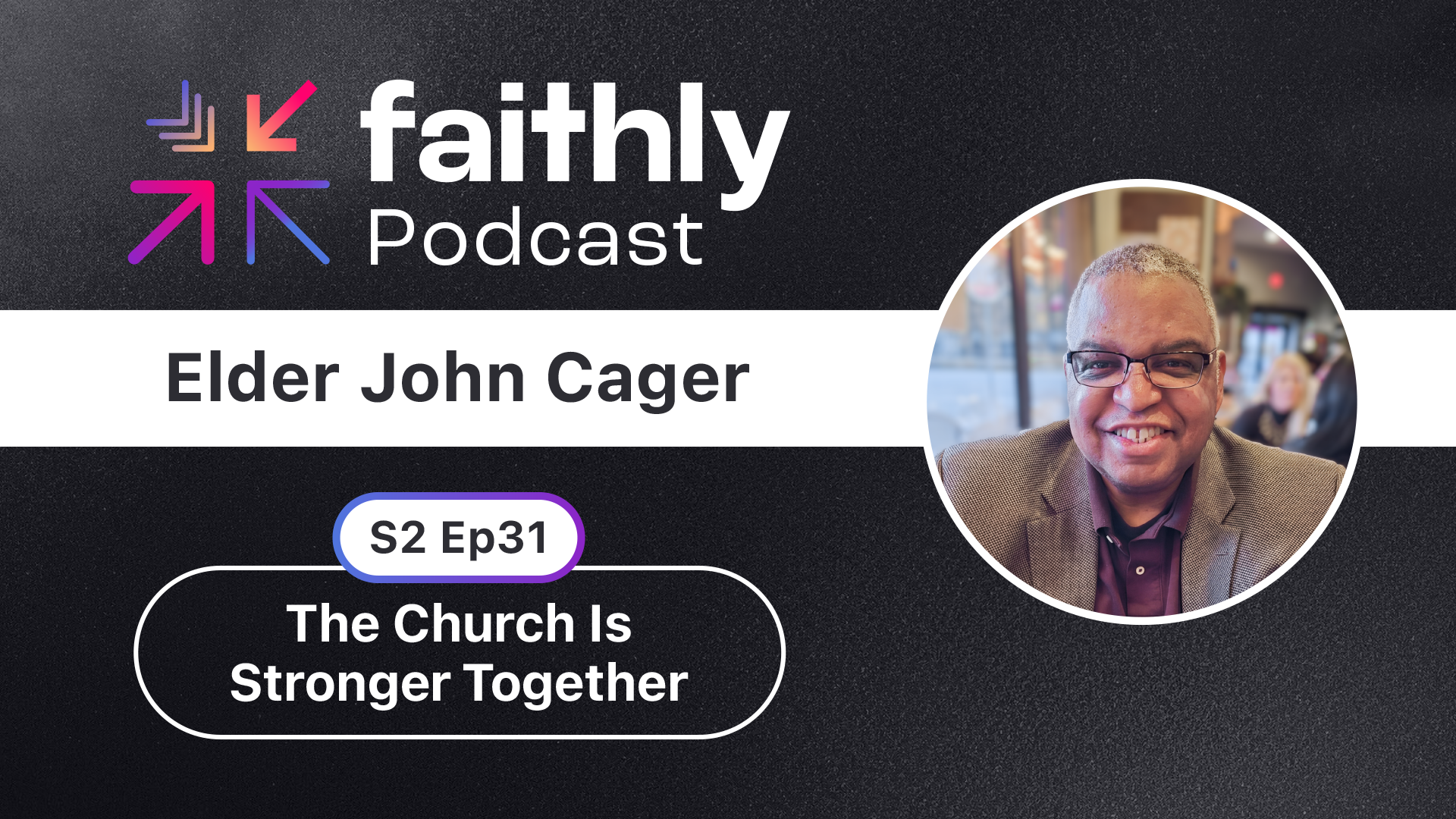
 Expanding Your Vision For Ministry - Elder John Cager | Faithly Podcast
Key Takeaways
- Elder John Cager emphasizes that being called to Christian ministry does not automatically mean being called to the pastorate, as pastoral leadership requires a distinct and unique set of spiritual disciplines.
- Success in ministry should never be measured by someone else's platform or congregation size; instead, leaders must focus on the specific assignment and gifts God has placed before them.
- Churches must cultivate both vision and flexibility to navigate a changing world, moving beyond traditional funding models to embrace creative revenue streams like affordable housing, community development, and collaborative partnerships.
- Pastors should embrace authenticity and integrity, presenting themselves genuinely and working to make the church function properly rather than chasing superficial markers of success.
- Hosting possibility meetings with congregants can unlock hidden talents and resources within the pews, empowering everyday church members to help shape innovative ministry models.
This week, Alicia Lee and special co-host Rev. Elliot Johnson welcome Rev. John Edward Cager, Presiding Elder of the Midwest North District of the AME Church, for a candid conversation about pastoral leadership, church growth, and what becomes possible when churches move from a mindset of “I” to “we”.
Rev. Cager reflects on initially resisting God’s call to ministry and the journey that eventually led him into more than three decades of service. Drawing from 25 years as a pastor and his current work mentoring and supporting pastors across his district, he explains why being called to ministry does not necessarily mean being called to the pastorate, and why success in ministry should never be measured by someone else’s platform. Whether serving three people or 3,000, he encourages Christian leaders to focus on the specific gifts, responsibilities, and assignment God has placed before them.
Throughout their conversation, Alicia, Rev. EJ, and Rev. Cager explore the importance of authenticity and integrity in Christian leadership, as well as the vision and flexibility churches need to meet the challenges of a changing world. From finding creative approaches to church finances and embracing technology to better connect with congregations, to drawing on the gifts already present within the pews, Rev. Cager challenges pastors to think beyond traditional models of ministry. Ultimately, he makes the case for greater collaboration across churches and denominations, reminding leaders that when we move beyond competition and work together for Jesus Christ, we expand our capacity to build the Kingdom.
Website: https://www.amec-midwestnorthdistrict.com/
00:00 Introduction: The Unique Perspective of a Denominational Leader
02:02 The Calling: From Resistance to Surrender
05:52 The Role of a Presiding Elder: Coaching, Mentoring, and Discernment
15:08 Authenticity and Integrity: The Foundation of Kingdom Building
21:13 What Makes Churches Work: Vision, Flexibility, and Spiritual Discernment
22:19 The Financial Reality: Multiple Revenue Streams for Ministry
26:11 Cultural Traditions vs. Biblical Mandates: Letting Go to Grow
30:26 Creative Ministry Models: From Fish Fries to Healthcare Clinics
36:06 The First Step: Possibility Meetings and Unleashing Congregational Talent
42:15 Technology as the New Lifeline: Staying Connected in a Digital Age
48:46 From I to We: The Power of Collaboration and the Federal Security Grant Story
Follow us on social media:
Website: https://faithly.co/
Facebook: https://www.facebook.com/thefaithlyco/
Instagram: https://www.instagram.com/faithly.co/
LinkedIn: https://www.linkedin.com/company/faithly/
X: https://x.com/faithlyco
Frequently Asked Questions
Who is Elder John Cager?
Elder John Edward Cager is the Presiding Elder of the Midwest North District of the AME Church, bringing over three decades of ministry experience, including 25 years as a pastor and current work coaching church leaders.
What is the role of a Presiding Elder in the AME Church?
A Presiding Elder serves as a liaison between the bishop and local pastors, handling administrative matters while providing coaching, mentoring, and discernment support for pastoral leaders.
How can churches improve their financial stability today?
Churches can look beyond traditional tithes by developing multiple revenue streams, utilizing unused property for community partnerships, and exploring creative initiatives like affordable housing, day schools, or health clinics.
What does 'from I to we' mean in church leadership?
Moving from 'I' to 'we' refers to fostering greater collaboration and cooperation among churches and denominations, working together for Jesus Christ rather than competing against one another.
And with many parents working multiple jobs or longer hours on their jobs, they're not going to have the time to take their kids to church after school. This is the Faithly Podcast. Hello and welcome back to the Faithly Podcast. I'm your host, Alicia Lee, and I'm joined today by a very special co-host, Reverend Elliot Johnson. Rev. E.J., you want to say hi? Hello, everybody. How are you today? Rev. E.J. is a special advisor to Faithly. Today, we're talking to his longtime friend, Elder John Cager, who is a new friend of mine, thanks to Rev. E.J. Elder Cager is a pastor and a denominational leader with the AME Church. He helps lead churches across his district, which means he has a unique view that most pastors don't get to see. He sees the struggles that churches have. He sees the opportunities, and he also sees the ways that collaboration can really strengthen the body of Christ. So whether you're a pastor, a church staff member, or someone who just loves the local church, I think you'll leave this conversation with some unique insights and a renewed hope for what becomes possible when we work together. Welcome, Elder Cager. I feel welcomed by you in the spirit of Faith, Lee. Wonderful to see my great friend, Dr. Jackson, I mean, Dr. Johnson, and my new friend, Alicia. Well, we are so happy to have you here, and I'm excited to go all the way back, go all the way back to the beginning when your ministry first began. When did you know that God was calling you to devote your life to the church? So I was raised in a traditional Baptist household. My grandfather pastored churches in Louisiana and Ohio for some 60 years. And when I was 14 years old, out of the blue, he asked me was I called to the ministry. I thought perhaps Alzheimer's was setting in because I didn't even like to go to church. When I was 21 years old in college, I had an angelophany. I was in my dorm room all by myself at one in the morning, and I saw a light descending upon me. And I said, that's the Holy Spirit, and it wants me to preach. And I said, God, please know. God, please know. And the light left. And the light left. Five years of hell later, I am living in Los Angeles. I had just been laid off from my job. I was couch surfing with my sister, who the price of my couch surfing was going back to church, because I hadn't been to church in however many years. And I went to the church, and Lord have mercy, the pastor there was... preaching to young black men. And I was like, oh, I could dig this. I joined the church because I was jobless at the time. I was working temp. They were having a youth camp that July and and needed counselors, and my sister Volan told me to go. Long story short, I went up for a week into the Angeles National Forest with some thoroughly undisciplined kids and the Lord, came back down, and... When I got back off the mountain, and this is going to sound thoroughly biblical, when I got back off the mountain, I had literally a three day encounter with the Holy Spirit again. Got up from it, called my pastor, called my mom first, who, of course, said I knew it. Then I called my pastor. Month later, I had started. I had entered the ministry program and started seminary. And that's been 37 years. Wow, that's an amazing story, Elder Cager. What I love about the story is just how real it is. You know, oftentimes I hear pastors say, I got the call and I said yes, and I jumped right into it and, you know, everything was great. The Lord had to speak to you through multiple people in multiple ways over many, many years. Wow. Absolutely. And that's the great thing about God. God understands that sometimes it takes a while for people to get where God needs them. David was anointed king of Israel at like 11 and became king at 40. And I love, I also love that he placed people in your life, your family who saw something in you It's really beautiful. Well, the thing is, again, God is active. And so God will move the pieces on the chessboard when God needs to. Well said. Well said. Okay. So, Elder Cager, you know, and we're calling today, you know, you are the presiding elder for the Midwest North District of the AME in Blue Station. Talk to me about that role in the day-to-day activities that you've got. Well, for 25 years, I was a pastor of congregations, and I led small, medium, and large congregations in rural and urban areas. In 2022, I became a presiding elder, which means I don't pastor a church, but I am the liaison between our bishop and a couple of dozen pastors in the Kansas City, Missouri, Topeka, Kansas, Omaha, Nebraska area. And in being the bishop's liaison, I, of course, make sure all of the mundane administrative matters of churching are handled. But what I really enjoy about the job is helping people discern things about their call to the pastorate, because pastoral ministry is a separate calling of ministry. And many people think that because they're called to ministry or even called to the gospel, they're called to pastor. That's not always true. And for people who are in pastoral ministry, dealing with things like dealing with God's people. How do I pastor folks who are my grandparents age? How do I pastor folks who are. are in a situation that they don't know how to get out of and they don't think I have the expertise to get them out of it. How do I plot my career so that I get everything out of ministry that I can? And so I do a lot of coaching, a lot of mentoring and a lot of prayer partnering. Because being in ministry, particularly being in pastoral ministry, is very vulnerable. People expect you to have all the answers. And as we know, when we go to God in prayer, God doesn't always answer immediately. And sometimes we need people to help us discern the silence or discern the signs. And so that is a huge part of my ministry, helping to shape people's ministry careers. Elder Cager, I love what you said. It's so honest and simple about people may be called to ministry, but not necessarily pastoral ministry. It's a different thing. What are some of the things you're looking for to discern whether someone might be called to pastoral ministry? Well, let us recall the words of Moses. These people are stiff-necked. but they're God's people. And it is difficult to have a successful parish ministry, leading a parish, if you cannot love people in spite of themselves. God made people the way that they are, and he did not make them perfect, but he made them. And he made them all with a yearning for God inside of them. So even when people are unkind to you and your family, or when people don't catch the vision that God has given you for the parish, you still need to be able to minister to them and minister with them. you know, and lead them and help them discern their own callings and workings for the Lord. For a person who feels like they're called to pastor people, I always give them the worst case scenario. When I came into the ministry, I can recall pastors and bishops saying, is there anything else in life you can do besides being a pastor? Is there anything else you can do? If so, go do it. Don't do this if you absolutely are not compelled to do it because human beings do human things and human beings often disappoint, hurt, frustrate folks in leadership. Now, the flip side to that is if you can develop the spiritual maturity and spiritual discipline to allow people to be people while providing a godly inspired leadership to them, one of the biggest joys in life is seeing how God through you can change people. and bring them to spiritual maturity, spiritual growth, and into community so that they can direct their angers and their own frustrations and disappointments into building the kingdom of God. That's good. That's good. It sounds like, yeah, it sounds like you had some wonderful leaders who poured into you and passed along wisdom from the very beginning. Yeah. I was blessed that the church that I came into ministry at, the First Amy Church Los Angeles, was led by the Reverend Dr. Cecil L. Chip Murray. I didn't know it at the time, but Chip Murray was the first person in the country to get the doctor of ministry degree. It's now the professional standard for ministry. And because he had a wide variety of secular experience before coming in the ministry, he'd been a military officer and whatnot. He came, he treated all of his ministry candidates with authenticity and integrity. He did not often use spiritual language with us, but used real world language and real world expectations. Taught us. Yeah. all of the intricacies of ministry as a two week old in the ministry student. He allowed me to sit in with him on marital counseling and, and negotiations with the mayor of Los Angeles and conversations with the bishop so that, I could and those who are in ministry with me could get a holistic view of the ministry. It's not just standing up on Sunday and preaching to thousands. It's not always going to hospitals and being treated like a, you know, a great healer. Sometimes it's. dealing with people's real world pains and real world frustrations and having to be that conduit to them to show them how to access the Lord's power to get over what they're dealing with. Hmm. Well, now you get to take all of that, right? You get to turn around and be that mentor and be that teacher and be that leader in your role where you help so many different churches and pastoral leaders. Now, can you give us a sense of how you define success in that role? The number one thing I tell people in ministry is do not measure yourself against anyone else. What God has for you is for you. What God has for them is for them. They were given a particular set of skills and abilities as were you. And God may have determined that their skills and abilities fit that situation and yours fit another situation. Yeah. People who've been in ministry for a while know that churches have personalities. Congregations have personalities. Every preacher's personality does not fit every congregation and vice versa. In my denomination, we have a couple of things, one of which is big or small, the work is all divine. So whether you're in front of 3,000 people or three people, do the work that's in front of you, and God will get you to the place where you have to go. Now, hat in hand with that understanding that your gifts and graces are for you is an understanding of what it is God has sent you to accomplish. Some people are sent to be great preachers and evangelists. Some people are sent to give the gift of administration to pull something that was failing back up to standard. Some people are given the gift of healing, if not healing bodies, healing souls, and healing wounded spirits. And so when you define success for yourself in ministry, you define it against the standard of what was it that the Lord sent you to do in your situation. Bishop Noel Jones is an incredible, a fantastic preacher. I can't preach like Noel Jones. But there are things I can do that he's not able to do. And so I maximize my ministry. He maximizes his ministry. She maximizes her ministry. They maximize their ministry. And success is measured against what it is that God has you to do, not what God had someone else to do. Amen. Amen. So, you know, we talk a lot and we talk about this whole concept of the kingdom of inertia and the values of my kingdom of inertia. You always told me that for you, it's two values that really combine your kingdom of inertia from theology and philosophy, and that's authenticity and integrity. If you can explain more on those two values and why those are so important. Well, I'm also a student at the Mastery Foundation's School for Transformational Leadership in Ministry because I noted almost 20 years ago that there was more that was needed in ministry than what seminary provides. And over the course of my years in my training, I've learned that authenticity is important in the context of authenticity is you're consistently being who you say you are. There are a lot of people in life and particularly in ministry who portray veils or faces. Their real selves are not revealed to you. God's business is too important to be entrusted to people who cannot represent who they are and be who they are at every juncture. Jesus says, let your yes be yeses and your noes be noes. People in general are turned off by those who they think are fakes or charlatans or in ministry for the wrong reason. And so it's for those who can present themselves as who they are and be that in every iteration where the gospel grows. They say that Paul was a horrible preacher. But his authenticity, his genuineness came out, and that's what helped spread the church throughout Asia Minor and the outer areas. Very often, when you look at thriving ministries, what people like about the thriving ministries is that the leadership is the leader. who they presented themselves to be from day one. They may have changed and grown an outlook, but their commitment and their genuineness is right up front. And I have learned not to waste my time to people who don't come across as genuine or authentic. That often means that they have motives other than kingdom building. Integrity in my context is really more of an engineering term. In engineering, integrity means that something works the way it's supposed to work. If you have a bathtub that holds water, it's working. If you have a bathtub that has a hole in it and the water leaks out or a crack in it, it's not working, it's out of integrity. In ministry, a person, particularly in kingdompreneurship, a person of integrity is a person who is working at all times to either make things operate the way they're supposed to operate or who sees the possibility of taking the broken and making the broken whole and work the way that it's supposed to work. Churches in particular, and we can go into that later on in the conversation, churches in particular are having tremendous problems financially. That's no secret. I don't care if it's Baptist, Methodist, Catholic, Pentecostal, Episcopalian. There's a giving issue, a revenue issue that's plaguing our churches. Integrity in kingdompreneurship for me means that there are people who are working to fix the revenue hole in in churching, not so that they can enrich themselves, but so that churches can be whole and function properly. Dr. Jackson, you made a lot of money for a lot of people in your career. But I know in your kingdompreneurship, the focus of that is so that the churches can work right. Not so that you can buy a Bentley and vacation in the Seychelles. It's because we need money to operate the kingdom. You know, when when when God separated the tribes of Israel, you know, he gave the priests no territory like the other tribes. We said, y'all need to pay into, you know, the priestly tribe and the priestly tribe gets to have sheep and goats and and and and other things so that they can generate revenue so that the kingdom works. And so with respect to authenticity and integrity, if you are who you say you are when I meet with you and you are working to make the kingdom whole, however you do that, then I know that you're a person who I can connect with and who is serious about kingdom building. Amen. Amen. That's really good. And I think that perspective comes from most pastors are seeing one congregation. You see many churches and many different kind of leaders. So you have this informed view of what works and what doesn't work. What other characteristics do churches that work share? What do you see? So, um... Two things. For the leaders, there is an understanding that you must have vision and you must have flexibility. The world, the church world has changed immensely in the past hundred years and a lot just in the past 30. And so we are facing situations where people. We can't do church the way we used to do church and expect to have success because the world has changed. And that's always been true. None of us do church the way that the early church did it 2000 years ago. Few of us do church the way that it was done 200 years ago when my denomination was founded. None of us should be doing church the way it was when our great grandparents were alive. take a little excursus. The world has changed immensely in terms of the relationship between faith and people of means. You're in New York. Elliot's in Chicago. In New York and Chicago, there are literally hundreds of churches that were built or funded by the Rockefeller family. because people of immense wealth felt that it was their duty. Having wealth was a privilege, and it was their duty to use their wealth to do the most good that they could. And 80 years ago, 50% to 60% of charitable giving by the mega rich was given to churches or faith-based entities. The Marriott family... I think it was J.W. Marriott was tithing 50% of his income to the Latter-day Saint church. And that was a huge fortune. And it went to do a lot of good. Today, the numbers show that while charitable giving among the mega rich is still significant, the amount that they're giving to churches is way down. And if they are giving to faith-based entities, they'll give to Catholic charities and institutions, but not to individual parishes. And so I said on that because for the pastor today, where your predecessors five pastors ago was able to build this huge edifice because of the grant or municipis of the Rockefeller family, now you are depending on people who are getting up and going to work every day and trying to carve out a slice of their disposable income to give to support the church, which means that you've got a smaller pot from which to support your faith community. So for people who are carving a career out in ministry, you have to have a real-world understanding of you can't say praise the Lord pay the light bill and the light bill gets paid. There has to be a way to fund the ministry. And there has to be an understanding that the church needs to be flexible in the way in which it approaches funding the ministry. I know a lot of young pastors who are of the mindset and who were trained that, The money is in the house. We don't need to sell chicken dinners or open a preschool or anything. We can get everything the church needs to operate out of the pockets of the membership, which sounds great, but it's not even biblical. You look at the book in the Bible, the kingdom of God was funded by the tithes of the people and by the sales of the animals and whatnot for the sacrifices. And by this and by that, it's always been a multiple funding stream. So you're fresh out of seminary. You spent $70,000 getting an MDiv or a DMIN and whatnot. And you come to a congregation and you're expecting the people to write all the checks to cover all the bills and all the needs. That's not realistic. And so when you're coming into ministry, you have to have the vision to see we can't do it the way that we did it before. Number two, you have to have the dexterity, the flexibility to be able to look and see how else does God want us to grab the necessary resources to fund this thing. The third thing is we need to have the spiritual discernment to understand the difference between biblical mandates and cultural desires. And I'm going to just take a couple minutes to talk about that. Much of what we do in church around the world is not biblical. It's cultural. I suspect Elliot and I have a couple years on you, Alicia, and I grew up in a church where a woman would not enter into a church without her head covered. She wore a hat or a scarf or something over her head because if she was in the church and her head was uncovered, she was being disobedient to the word of God. And it was the other women in the church who would hold her to account. Right. And dress down to rank. Right. And oh, wait, wait, don't let them see your knees because there were plenty. There are plenty of little old ladies who had these scars who they would rush up and put these scars on. We put these lab scars over you. But we discovered that's not biblical. That's. cultural. You go into churches today, particularly some of these large mega churches, you don't have to worry about seeing the women's knees because they're on their pants. If they're wearing anything on their head, it's a little clip to hold their hair back, but nobody's thinking about covering their heads. Meanwhile, on the flip side, you go in the church and you see all the men wearing ball caps. Now, if you wore, if a man wore a hat into church when Ellie and I were coming up, somebody would come up to you and smack that hat off your head. And we have to understand in church today, particularly when churches are hurting for 18 to 38-year-olds, we have to understand that some of the things that we thought were sacred in the Bible were just traditions that we can let go. Because churches have to have a constant influx of people to grow. And you have to have young people come in because the best way to grow a church is through the womb. And you won't get families and women of childbearing age if you have a culture in your church that rejects them because of some cultural and non-biblical things. It's difficult for pastors because most of us have been raised and come to love the tradition of the churches that we're in. But we have to understand even the traditions that we were raised in may not have been the traditions that the church was founded in. Right. Hmm. Well, Elder Cager, I think, you know, I'm in New York City. Right. And as you're talking about the culture and dress codes, there's no dress code in New York City. So I'm kind of laughing as you're talking, right? Like a pair of jeans could have holes all over it. It is no problem. I'm going to cut you off on me and just share with you. I was president of the Council of Religious Leaders. And when I took it over, I had a... an older Jewish gentleman who was president of the synagogue. And he came up to me and he said, very plainly, do people dress up in your churches? And I said, well, yeah, the older people kind of like us. You know, I am sick and tired of these young people coming to the synagogue and they're wearing blue jeans and T-shirts. We're supposed to dress up and honor God and respect him. And I was like, my friend, you're 80. The 18-year-olds are not interested in what you have to say about their dress. And I suspect God isn't either. Well, you know, there's validity in both views. Like, there's something about the tradition, right? There's something about the culture. Like, that part's important, too, but I think your point is so well made and is so important for church leaders to hear today because it's about bringing it all together, you know, and having an openness for the vision that the Lord has for the church today, right? You mentioned church leaders have to have a little bit more vision for finances than just relying on tithes. Can I ask you, what are maybe one or two really creative ways that you've seen churches in your district do something a little different when it comes to finances? Well, and this probably started... 70 years ago, but a number of churches, particularly my denomination, got involved in building affordable housing or senior housing projects. Depending on how you do that, that can be very lucrative for the church or it can be disastrous. And it's just depends on how the deal is structured and, and whatnot. But for those who can, can do those kinds of ministries, it, it, it has multiple benefits. Number one, if you have a project that is bringing in, you know, using excess or unused church property to bring in revenue, that helps fund the ministry. But more importantly, at the church where I trained at in Los Angeles, We routinely got 20, 30 families a year joining the church out of the housing projects that we built, out of the housing communities that we built, because people, when Elliot and I were kids, we were taught, it's only what you do for Christ that lasts. Right. for modern generations, they want to know what is the church going to do for them? What is the church going to do for their community? What value add is the church going to bring? And then when they see that the church is bringing housing or this or that, that attracts them and gets them to join. I pastored a church in a more rural area where we had a feeding program, a food distribution program. And long story short, we ended up having a couple join the church out of the food distribution program. And later on, when they got on their feet, they became not only officers in the church, but some of the biggest givers. You know, and it's because the church had programs that supplemented them. Many churches form community development corporations, economic development corporations that are a standalone but in affiliation with the church. And not only do they provide great community ministries, housing the homeless, feeding, education programs, church schools, or sorry, day schools and things of that nature, but they also provide the church a stream of income as well. So, and families joining the church from the school. I have a rabbi friend who almost all of the new members of her temple have come from the day school. You know, because young couples, particularly you move to a new area, you don't know a lot of things. You put your kids in the school. They make friends there. You see parents your age and people want to be around people their age. That brings you in. And so education programs, housing programs, economic development corporations, because economic development corporations are able to go and target grants that faith based entities can't. but they can use the income from the grants and whatnot to do things like rent space from the church, co-locate programs with the church. Perhaps the church does the food distribution, but the Economic Development Corporation funds the food distribution, which then brings in more people. So you have to... be able to be nimble enough to see not only what opportunities are out there, but also how they can help grow the church in multiple ways, not just financially, but in terms of membership. I think probably the most, funny story I've heard, I have a church in a very small town in Kansas near a military base. And, uh, one of the things that the church had was members who were formerly food service people in the military. And so this is a church that, as a one-off, decided to do Saturday fish fries, more as a friend raiser to bring people from the community to the church, taste the fish, whatnot, and, The outgrowth of that was not only did it become very financially lucrative for the church, but on the Saturdays when they stopped having it, they were getting calls from the base commander. You know, people are upset. They weren't able to come by and get their fish dinners from your church. And people could have gone to restaurants or whatnot, but just being able to come into the faith space, enjoy the food, be in the faith space, brought revenue and activity. I love that. I love what you shared. And I know we have listeners right now whose gears are turning right now who are saying, hey, we're not doing well financially. Do I need to start a fish fry? So can you offer one practical first step that a pastor can take if they want to expand their vision of finances of their church? How can they take a first step? I think the first step every pastor should do is have a discernment meeting with the leadership in their congregations. You would be amazed at the talent that is in the pews and even our smallest churches. And very often people don't get involved because they're not asked to be involved. But if you have, I encourage all of my pastors, have a possibility meeting. and talk with your people about what is possible. I was fortunate to sit in on such a meeting with a church, not one of the churches I supervise, but a friend brought me in to do a workshop. And as the members, of the church talked about what could they do in a community that was declining in population because they closed the military base, da-da-da-da-da-da. One of the members who had been in the healthcare ministry said, you know, this healthcare company does not have any facility within 60 miles of our town. What if we approach them about putting a walk-in clinic, in our unused property or in our fellowship area. And they pursued that and made it happen. And so not only are they getting, do they have a nice relationship rent-wise with the healthcare company, but the people who come to the clinic there are people who are exposed to their church who would not otherwise ordinarily be exposed to it. And that was not... That was not a club in the pastor's golf bag. The pastor met with a member and the members came up with out of their experience and their knowledge base what was available. And let me just tack on to this. Pastors should not and do not need to be the experts of everything. They need to be the managers of the community. But smart pastors will utilize the talent and the skills and abilities of those who are in the communities. That's good. That's good. So, Elder Cajor, let's talk about, like, the big picture here with the church. And you've, you know, you, most pastors are just tied into their congregation, but, you know, you had an opportunity to visit and see many churches and understanding a broader perspective. What have you noticed about that? And then what has encouraged you about some of the things you've been able to witness? Let me take that in reverse. What encourages me in seeing groups of churches across disparate communities is the dedication that many pastors have towards their work. It is, and because I've done it all, it's easy to go to a church where you've got 1200 people cheering you on as you bring a Sunday message. It's difficult driving four hours to a church where there are seven people who are trying to figure out how to fix the roof or or or or pay the skyrocketing insurance premiums when only four of them have income. And to see the people who have the dedication to drive the four hours and serve the seven people or who have the dedication to very often pastor for free because the amount that they're tithing into the church exceeds the amount that the church is compensating them. And yet they go and do it. It encourages me because that shows me that there are people who are in ministry just for the sake of ministry. You know, they have no ulterior motives. But what also encourages me and keeps me going is seeing those folks who get into ministry to do things the right way. And God gives them the increase. And they start with four. And in a year, they have eight. And in two years, they have 30. And in five years, they have 100. Or they take the four people to 16 people, but the 16 people are able to do new ministry in this little tiny town and bring new life and vibrant energy into churches. What really encourages me is to see people take the lessons from, because I don't ever believe in starting people at the top. I think that there's value in starting at the bottom and working your way up so that you don't miss lessons. And it's really gratifying to me to see people who were given a stomp. and they made a shoot grow. And then they went from the shoot to a small garden and made the garden grow. And as their ministry, their capacity for ministry increased, they were given more and more responsibility, and they made it happen for the Lord. So seeing ministers grow from and through the struggle has been very gratifying for me. Praise God. Praise God. Praise God. Elder Cager, when we spoke last, and this is, you know, it wasn't recorded for the podcast, but we were just having a conversation, and you made the observation that one of the greatest technology challenges that pastors and churches face is just staying connected with the people who are sitting in the pews. Why has that become such a challenge? what an integral part the church played in the lives of seniors and single people. There were a whole lot of senior folks, a whole lot of single folks for whom the entirety of their social life was mixed up in the church. And so if you were in an area like California and New York City where churches closed, For some people, it was like cutting off the water and they shriveled up because of the lack of human contact. For churches that had robust contact systems where they were able to reach people, call people, in some cases stop by and see people, they literally kept people alive. many churches lost members who I'm convinced didn't die from COVID, but died from lack of human contact because the churches did not have the technology in place to reach people reliably. More to the point for those folks who weren't able to get to church, those churches that had the ability to reach, broadcast their services or send out e-blasts, send out a little video and audio messages, podcasts. Those kept people going until they could come back into the church. Fast forward to today, and I'm going to hold the back of it up. For people in my daughter and granddaughter's generation, this is the lifeline. And there are churches now that operate by sending 90 second to five minute sermons and sermonettes to their to their members on the phones. People do not go into the church at all, but they have a connection to the church electronically. One of our pastors in my denomination has a church on roadblocks or something like that. I don't even know what that is, but. They're using virtual means to contact and connect with people. I grew up, and I suspect Elliot did too, in a neighborhood where there were five churches in a two-block radius. The church I belonged to was two blocks away, not even a full two blocks away. My parents could push me out of the door Sunday morning, and I would stumble or follow the crowd of kids on their way to Sunday school. Most of the churches in the United States right now are commuter churches. People can't have their kids walk to church. I mean, now people don't even have their kids walk to school. And with many parents working multiple jobs or longer hours on their jobs, they're not going to have the time to take their kids to church after school. Maybe on the weekends they can do that, but on the weekends now you're competing against soccer and football and dance and drama and ACT classes. But you can reach everybody through this. You can reach everybody through. through the tablet. And for the churches that have the ability to make those outreaches, they have a leg up on everyone. We're wonderfully blessed that there are a number of platforms that offer that connectivity. I won't mention them, Elliot can mention the ones he's connected to, but there are a number of great platforms that are out there where you can connect with people electronically and keeping the electronic connection is important because on those opportunities that they have, where they can come to the church physically, they will know to come to church physically because you kept up with them electronically. Yes. Well, I hear in what you're saying, a call to church leaders to think more expansively about technology, because that's where the people are, right? You held up the phone. And I think when it comes to technology, luckily, there are lots of platforms that are really well known. And what I hear you saying is, go figure it out, go learn something about them and tap into the people in your pews to help you, perhaps. One of the things we have to remember is that technology has always affected the church. If you're in New York, you're in Chicago, you guys know that there are churches that had to buy property to install parking lots because when they were first built, People came by foot or by horseback. There weren't cars. Yeah, it was in the neighborhood. Now that people are driving in in the 50s and 60s, they're like, if we don't have a place for people to park, they're not going to come. And they had to make that adaptation. It's the same way now with using technology to stay in touch with people. With the... With the modern church, we often get very caught up with sacred language and faith language, which is why I like authenticity. When you are authentic about evangelism, evangelism is marketing. And no one would have an issue if you were starting a grocery store, reaching out to people through your app, you know, through text messaging, through emails, through however you could to get people to come to the store. Why does a store deserve more opportunities to use technology than God's house? You know, because we have to market the church. That's what the Bible says in the Great Commission. Go you therefore into all nations, marketing in the name of the Father and the Son of the Holy Ghost so that people will come in. Well, Elder Cager, we're coming up on time. So what I would suggest is this. Maybe Rev. EJ, you can ask your one last burning question of Elder Cager and I'll do the same. Does that sound good? Yeah, that'll work. So, okay, how about this? In the spirit of churches collaborating and working together, you had told me something recently. You said churches just don't play well together, right? Why do you think that is? And then what if God gave you an opportunity and a chance, what would you do to change that? Right. Well, let's understand this. Churches are composed of people. You can look in the Bible. Much of the New Testament is Paul not trusting Peter. Right. And James and John not trusting either of them. You have the Jews and the Samaritans feuding over the same God. You know, one worshiping in this city, one worshiping, one group worshiping in that city. The problem with churches not playing together is that they're composed of people and people-led endeavors ultimately involve ego. And with churches, it often comes down to, it sometimes comes down to, we don't want to work with those folks because some of our folks may end up liking their church better and joining their church. Or those folks, those folks stand together. when the scripture is read, and we sit when the scripture is read, and we don't want their standing during the scripture to contaminate our sitting during the scripture. And it gets real silly at the granular level because people are involved. What we hope is that when people are authentic people, and they operate in integrity, meaning they want the church to work. They understand that just like the Bible says, you know, some may water, some may plant, some may water, God will give the increase. If I work with you and you work with me and we make the kingdom grow, it doesn't matter if five people were at my church, join your church, or if people who used to sit while the scripture was read now stand. The bottom line is we are growing the kingdom. And in kingdom building, it's a rising tide floats all boats. If we build an attitude and an atmosphere where people are trying to become part of the kingdom, trying to expand their walk in Christ, all churches are going to benefit. You know, my hope would be that pastors would not silo and isolate themselves, but come together and understand if I'm a Presbyterian, I don't have to side eye the charismatic. If I'm a charismatic, I don't have to look distrustfully at the Catholic. We can all work together for Jesus Christ. And the more we get people involved in Jesus Christ, the more people who will come in and engage with all of us. Amen. I love that. Well, yeah, I thank you, Elder Cager, for that. You don't just hope for this. You are doing things actively and proactively to make this kind of unity and collaboration happen. I was blown away by this incredible story you shared about helping the churches in your district work together to secure a federal security grant. Can you share that story with our audience Well, I won't take 100% credit of it because it has been a mandate of our bishop who, Elliot, knows that we look for ways to be collaborative in kingdom building and our principal supervisor who has expertise in the area. But the long story short is the federal government under the Department of Homeland Security has for a period of several years now, offer the nonprofit security grant for which community churches are, communities of faith are eligible to apply. The grant gives you money to make your campus safer, hopefully cut down on incidents, mass shootings, things of that nature. in our area in Western Missouri, the grant recently reopened, the funding period recently reopened. And as a part of the grant, um, communities were allowed to apply as a group in a category and multiple entities in that group could get the award. We had 20 churches in Western Missouri. We knew that there were going to be three awards. We encouraged all of the pastor's six, eight months ago to have their congregations start working on the basic information that the grant would need. I'm not going to give you the details, but there were certain demographic information, fiscal information about the congregation, political information about the area. And then when the grant opened, we had a team of grant writers from within our pastors and lay persons who picked the three congregations that we thought were the most able to handle the grant. And then the grant writing team wrote the grants for them, submitted them en masse for those three openings. And we're fairly certain that three of them will get the award. Well, so that's amazing. Have you seen the relationships between those churches change after doing this project together? I've seen the relationship of all 20-something churches. change. It goes into from an I to a we. And when you go from from I to we, you have a couple of things happen. The first thing happens is that you realize that it's not just you. It's not just the 14 of you in Boonville, Missouri. It's the 2,000 of you in Western Missouri who are working together. And the other thing is you expand your capacity. You know, it's not just the 14 of you, but it's a group of us in 20 different areas pooling our talent and our resources to make it happen. That's so good. And I think that might just be the title of this episode, going from I to we. What do you think, Eldra Kager? Well, thank you so much. We could ask you probably a hundred more questions, but this has just been wonderful. You've shared just so much wisdom, so much insight, really, I think, challenged all the pastors and ministry leaders who are listening. And I just want to thank you again for that, Elder Cager. Great. It's been my privilege and keep up the good work of Faithly. Ministry leaders need resources, need tools. They need information. They're scared to ask. So it's great that you have this format and this resource for them to access. All right. Thank you again. And thank you, Rev EJ, for co-hosting this episode with me. I'm so grateful. Take care.
Elder
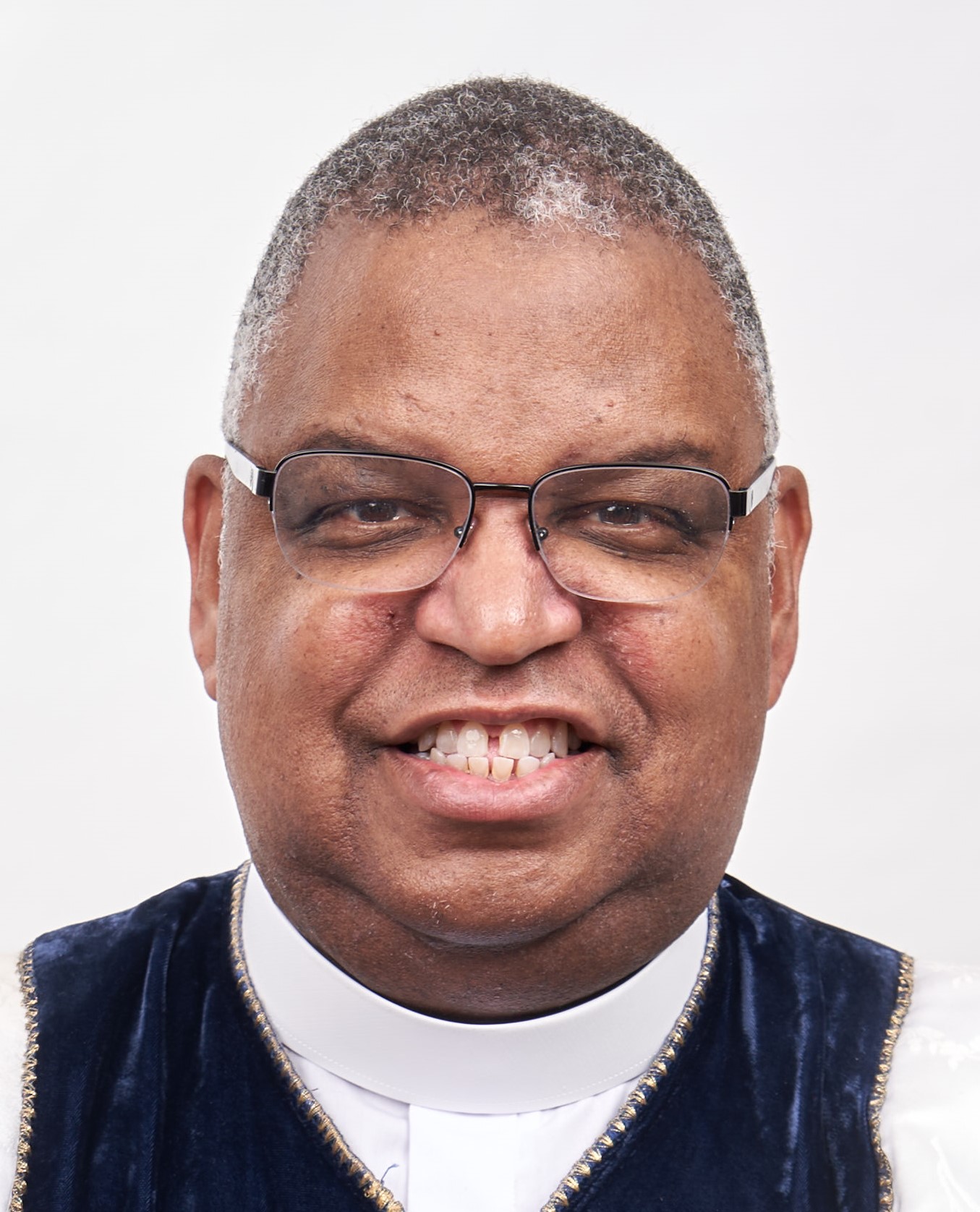
The Reverend John Edward Cager serves as Presiding Elder of the Midwest North District of the AME Church. An ordained Itinerant Elder since 1994, Cager began his ministry under Dr. Cecil L. “Chip” Murray at the well-known 1st AME Church (FAME) in Los Angeles, where he directed the Youth ministry and managed some of FAME’s many social justice & social entrepreneurship programs, including the Disneyland Summer Employment Program for youth from south Los Angeles, and the LA Metro taxi voucher program for seniors and the differently abled. Rev. Cager pastored St. Paul Presbyterian Church (Baldwin Hills, CA), St. Stephen AME Church (Los Angeles), Bethel AME (Fontana, CA), 2nd AME (Los Angeles) & Ward AME (Los Angeles).
Reverend Cager is a co-founder of the Faith Community Coalition. He is an adjunct faculty member and Board member at Aldersgate School of Ministry, a board member of Sunnyside Five (which shelters unhoused college students) and a partner at LOGOS Faith Development/LOGOS Sponsor. Cager also served as the President of the Los Angeles Council of Religious Leaders from 2016-2022. He is a recipient of “Pastor of the Year” Awards from the Inland Valley News (2007) & Southern California Conference Lay Organization (2016), and a scholarship recipient of The Mastery Foundation’s School for Transformational Leadership in Ministry.