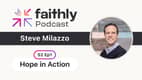
(0:00 - 0:12)The one thing I didn't know is how God was going to grow this. I just heard the voice of God and said, I want you to do this outreach. I want you to gather churches together.(0:12 - 0:29)I didn't know year two was coming and year three and four and five and six. I just wanted to be obedient to what God told me at that moment. This is the Faithly Podcast.(0:31 - 0:50)Welcome back to the Faithly Podcast. My name is Alicia Lee, I'm your host today, and I am joined by the great Pastor Steve Milazzo. Pastor Steve is the lead pastor of Bethlehem Assembly of God in Valley Stream, New York, not far from where I'm recording in New York City.(0:50 - 1:01)And he's also the president of Hope Day Network, which I am really excited to learn more about today. Pastor Steve, thank you so much for being here today. Thank you so much for having me.(1:03 - 1:37)So I want to start at the beginning. How did Hope Day first come to life? What was like the moment or the burden that sparked this movement 15 years ago? Well, I think it started when I was 19 years old and the Lord told me go out into all the world and preach the gospel and really just use your influence, your life to reach people for Christ. And so from day one, you know, I've been always very passionate about people confronting the love of God in a very compassionate way.(1:37 - 2:02)And so all through the years, we've always had outreaches in our church, we do a lot of outreaches. But I felt like 15 years ago, I felt like, you know, the media, the world, they were looking at the church as being siloed, divided, in a lot of ways, not partnering and not working together. And so I wanted to change the script.(2:02 - 2:25)I wanted to change the narrative of what the world sees the church as being instead of being just not working together and kind of irrelevant. I wanted them to see that, you know, we do love people and we have compassion. And so I actually called a friend of mine who is a part of an organization called Convoy of Hope.(2:27 - 2:44)And I just said, look, I want to do a major outreach, but I wanted to have a real compassionate piece to it. I don't want to just stand on a corner and tell people they're going to hell. I want them to see the love of God, because I believe the kindness of the Lord leads us to repentance.(2:44 - 3:09)And I think there's nothing more appealing and there's nothing more attractive than a Christian who really genuinely loves people. And that's what Christ did, right? And so we got together, we put our minds together, and we talked about having what was called the Convoy of Hope Outreach. And Convoy of Hope came in and they trained us on how to have an outreach for maximum impact.(3:10 - 3:24)And so we did our first event. Let me back up just a little bit. What we did actually is we decided I first wanted to do it in Valley Stream, where our main campus is.(3:24 - 3:37)And the Lord said, no, I don't want you to do it in Valley Stream. I don't want you to do it in your city. I want you to choose a city that really could use the love of Christ in a very tangible way.(3:37 - 4:12)And so we prayed and we landed on Hempstead, Uniondale. And so myself and just a few other leaders, we began to develop relationships with pastors in those communities. And every month we would gather to pray together, to get to know each other, and just share the vision of doing a corporate event where we as a church can come together united and just really love on people in a very practical way, and then give them the opportunity to be prayed for and hear the gospel.(4:14 - 4:28)And I also, one of the things that was really powerful is I went to the board of my church and I said, and guys, I just want you to know this is what the Lord told me to do. And we're going to flip the bell, you know, we're going to flip the bell. We're just going to basically pay for it, you know.(4:28 - 4:45)And they were like, Pastor Steve, if God told you to do this, we're behind it. And so I thank God for their heart, their generosity, and they're just coming behind us. So we did our first event 15 years ago, and we served about 5,500 people.(4:46 - 5:01)Wow. And it was just wonderful, the lines of people that came, and we had a huge children's zone for children to come and just have a really great time. We actually had a barbecue for 5,500 people.(5:01 - 5:10)We gave away free shoes. We actually washed people's feet, and then we gave them the shoes. That to me was the most sacred tent of all.(5:10 - 5:39)You could feel the presence of the Lord in that tent as volunteers just humbled themselves and washed people's feet and then gave them shoes and prayed for them. It was just beautiful. We actually had a community service tent where we had people from the community, businesses and organizations that partnered together to offer people very practical help in things that they might need, writing a resume, all kinds of different things like that.(5:39 - 6:04)We had a prayer tent or connections tent. We had groceries where everyone would leave with bags of groceries. And I know that you had asked a little bit about, you know, what were those moments where it really touched your life? And one moment that really touched my heart was that there was a little boy with his mom and they were leaving the event.(6:04 - 6:13)And on Long Island, I could not believe what I was hearing. But the little boy said, today we get to eat, mom. Today we get to eat.(6:13 - 6:30)And I thought to myself, on Long Island, there's hunger, you know. And there was a lot of other services, a ton of different things that we had done just to love on people. We actually had portraits, free portraits for families to come and get their portraits.(6:30 - 6:49)We had a beautification tent where we were cutting hair and doing fingernail polishing for women and all kinds of wonderful things to just serve people in a very practical way. Wow, that is so beautiful. And so all of that happened 15 years ago.(6:49 - 7:09)How many churches were a part of that first Hope Day with you? There was about 50 churches that were a part of the first. And were they all in Long Island, all around your area? No, they were they were actually in Long Island, in the boroughs, even a few of them from out of state. Wow.(7:09 - 7:37)OK, for a pastor or a ministry leader who's listening, walk us through what actually happens on a Hope Day today. How has that evolved from what you did on your first Hope Day to today, 15 years later? Yeah, well, I would say before we even get to the event, the reason why we have a passion for doing Hope Day is because we want to equip churches. We want to come alongside pastors.(7:37 - 7:48)We want to support pastors because we know pastors are so busy. They've got a lot going on, but they want to reach their community. And so I believe partnership is so powerful.(7:49 - 8:29)Exponentially, we do more together than we can apart. And so like organizations like Convoy, now Hope Day, different organizations coming together to help equip the pastor, to help support the pastor, train the pastor and just come alongside churches and say, OK, look, you can build relationships with your community. So actually, before we ever get to the day of Hope Day itself, that that day when we have all of these different events going on at one time in different states and with all kinds of volunteers, we have what's called a Hope Day launch, which you've been at and where we will actually do three different seminars.(8:30 - 9:15)The first seminar is how to actually have an outreach for maximum impact. And we help pastors and leaders think through what a real outreach could look like. How do we do it where we gain a lot of visibility? How do we do it where we have the ability to reach people with inviting them to come to the event? How do we follow up on those people after they come to the event? What what are the things that we do to make sure that people are cared for, they're respected, they're honored at the event? And so kind of creating really a great event for people say, wow, this was a really a world class, excellent event that you've given us today.(9:16 - 10:14)And so that's that that's a seminar. The next seminar is leading people from building a bridge from the event to the local church through follow up assimilation and discipleship. And then the third seminar is leadership training and helping churches then stay in their community, thinking through creatively, how do we take what we did at Hope Day and turn one day into every day? So so really from the beginning of February all the way to June, we have trainings that are happening on Zoom for churches where we help them think through, plan through for the event.Then on the day of the event itself, a guest will they've already been invited. We actually try to do personal invitations more than anything else. And so they've already been invited when they get there.(10:14 - 10:30)They're they're actually going to go in one entrance because we have this big red carpet for people because they're our VIPs, they're so important to us. And when they walk in, from the moment they walk in, people are high fiving them. People are celebrating them.(10:30 - 11:05)People are letting them know that they are VIP and we're going to treat them with love, respect and dignity. And then when they come in, if they have children, they could drop their children off at the children's zone and then they'll go through. It's a four hour event and they could stay as long as they want and they'll come through.There's a place where they can have lunch. There's entertainment where they can hear a concert. There's all kinds of things that we do to bring good, solid entertainment for them.(11:05 - 11:13)Then they can go to the beautification tent. They can go to the shoe tent. There's basketball tournaments for the teenagers.(11:14 - 11:35)And then there's community service where they can find things that they would need for us to come alongside of them and help them with. And so there's a bunch of different areas of services. There's a medical tent where we actually have doctors and nurses, ophthalmologists giving out free glasses and things like that.(11:35 - 11:51)And so there's each and every event that we have or location might vary a little bit. So one might have something that another one doesn't have. But for the most part, it's all based on meeting the needs of the community.(11:51 - 12:11)And so there are pastors that are very creative and they're saying, like, these are things that my community may need. And they're going to. So it's all about figuring out what are the resources? You know, what are the partnerships where we can meet the needs of the people? And then there's a lot of things that they could do during the day to enjoy themselves.(12:11 - 12:21)And at the end, there's only one way in and there's one way out. And at the end, they have to go through the connections tent. And when they go through the connection tent, we want to connect with them.(12:22 - 12:32)And we offer them prayer. We say, would you like for us to pray for you? And we have prayed for thousands and thousands of people. People want prayer.(12:32 - 12:44)They really genuinely want to be prayed for. And then we ask them, you know, did you enjoy the event? We have one more free gift that we'd like to offer to you. And if they're open to it, we offer them the gospel.(12:45 - 13:05)And we've seen thousands of people receive Christ as their savior. And then on the way out, they receive their groceries. And they receive more information about a follow-up event that each and every different location has for those people at the event.(13:05 - 13:19)And it's just been amazing to see how people respond so well to love and kindness and to the gospel. That is so beautiful, Pastor Steve. It is really Christ's love and compassion in action.(13:19 - 13:27)So you had 50 churches at that first Hope Day 15 years ago. How many did you have at the last one? Um, over a hundred. Over a hundred.(13:27 - 13:45)Wow. And what kind of geographies? Where were these churches located? Yeah, well, so from Texas, Florida, those are the southern ones. And we've actually made somewhat of a shift in how we do it.(13:45 - 14:05)So now we have Hope Day North, Hope Day South or Hope Day June and Hope Day March. Um, so what we're doing now is we've made a shift in allowing churches down south to do it at a different time because it's really hot south. And so people don't want to come out that hot.(14:05 - 14:29)So we've actually got two different times that we do it now. And we like to do it on the same day, at least, you know, if it's going to be two different days, we have all the southern churches and southern organizations doing it on the same day, because we love the synergetic, the exponential power of coming together with all these volunteers. We have thousands of volunteers.(14:29 - 14:34)They all have their shirts on. They don't have their church shirts on. It just says Hope Day on it.(14:34 - 14:46)It's red and bright, you know, and it's really wonderful to see the thousands of volunteers that do it. But on one day, we just say, look, we really want to be praying together for that day. We want to be working together.(14:46 - 14:54)It shows a lot of unity when we do it, you know, on those days. Right. And then we're all the way.(14:54 - 15:09)So we're in seven states now. So we're in New Jersey, New York, Rhode Island, Connecticut, down south, like I said. I'm not sure I got all the states, but we're in seven states.(15:09 - 15:28)You're in a lot of states. This love and compassion has spread, and you're doing it together, really displaying the unity of Christ. So for the churches that are in your area, the Hope Day event happens in June.(15:29 - 15:52)There is a launch day to help churches get involved, to help them get trained up with seminars. That launch day is coming up for our area, right, Pastor Steve? It's coming up very quickly on February 7th. So for churches who maybe have not been involved in Hope Days in the past but want to get involved, they should attend the February 7th launch day.(15:53 - 16:02)Absolutely. And a few reasons why they should attend. One is to find out more about Hope Day, but also we just want to pour into them.(16:02 - 16:30)So the launch is not just about churches that are going to definitely do Hope Day, but it's really about helping them to learn to think about how to get out of their four walls, how to do outreach. So we're going to pour into them with these seminars that we're doing, leadership seminars and outreach seminars and follow-up and discipleship seminars. So everybody's welcome to come, and we'd love for them to partner with us and be a part of Hope Day.(16:30 - 16:37)But even if they choose not to do that, it's still okay for them to come. Amazing. All right.(16:37 - 17:10)So here's a question that I bet pastors are wondering right now, if they're interested, which is, what does the Hope Day network supply to each site today? And what does the host church need to raise or contribute themselves? Those are great questions. So what Hope Day helps to do is we supply training, we supply encouragement, we supply just every month being able to mentor. We'll walk you through the whole process for this whole thing.(17:11 - 17:47)We also, because of our great partnership with Convoy of Hope, we provide groceries for all the churches that are going to be a part of it. And one exciting thing is that Convoy now has made a deeper commitment because we're actually not just doing Hope Day in June and March now, but we've also started a Hope for Thanksgiving where we actually, Convoy's sending us resources again, and we give it out to all the churches free of charge, and they're able to get their resources again and go out for Thanksgiving and just give it out. It's not a Hope Day.(17:47 - 17:56)It's not like a big event. It's more like, hey, let's just keep on giving and keep on loving our community in very practical ways. So we offer them mentoring.(17:56 - 18:10)We offer them teaching, coaching. Then obviously we offer them the groceries through Convoy of Hope. And there are times when we even give scholarships from time to time.(18:10 - 18:23)We'll say, hey, this church is really struggling. Let's see how we can get them some scholarship. And not only that, but we really offer them a network because it's not just about the day.(18:23 - 18:42)It's about being a part of a network of churches who think the same. We want to reach our community, but we also want to build relationship. And so I've built all these wonderful, powerful relationships, even with Faithly as a result of Hope Day.(18:42 - 18:56)So it goes well beyond the day. It's just the church being the church together. And so I have some wonderful relationships and wonderful friends today through the Hope Day network.(18:57 - 19:04)It's not the only network. It's not the only denomination. And by the way, Hope Day network is interdenominational.(19:04 - 19:14)So it's not just one denomination. It's non-denominational. So any church that wants to preach the gospel, wants to love people, are welcome to be a part of it.(19:16 - 19:35)Wow. So you're telling me if I'm a pastor in central Pennsylvania and I want to host a Hope Day, that Hope Day network and Convoy of Hope will find a way to get me groceries that I can bless my community with? Yes, yes. I mean, That's on top of the training.(19:35 - 19:43)That's on top of the mentorship and the friendship and all of that. Yeah, well, they might have to come and pick it up. But yes, we'll provide it for them.(19:43 - 19:49)You know, we have locations where they can come and get it. We have separate locations. Wow, that's amazing.(19:50 - 20:27)Okay, so when you look back these past 15 years, what has remained the heartbeat of Hope Day? And what has changed? Has anything changed in how you're thinking about? Yeah, well, I think what had changed, we were doing it in the beginning for the first three years, and we would just do these big outreaches. And it was one outreach or, you know, it turned into three. So, but there were still large outreaches where we were asking churches to come into a community and help that community.(20:27 - 20:38)And that's great. I mean, it's really wonderful when churches are willing to go to other communities. But on year three, I felt like the Lord said to me, okay, let's decentralize the whole thing.(20:39 - 21:07)And instead of having it in just one community or just even three communities, let's give all of the resources and let's give all the training and let's give all kind of the power back to the pastor to do it in their community, you know. And so after year three, we began to multiply this by decentralizing and saying, look, we're here to just support you pastor. We're here to see that you can reach your community.(21:07 - 21:21)And that's been pretty much the mode of operation going forward. And we don't want that to change. We want the pastors to feel like this is for them.(21:21 - 21:34)It's not about them joining an organization to make the organization greater or more visible. It's really about keeping it grassroots, keeping it as lean as we can. And we try to do that.(21:35 - 21:48)We really do. We try to keep it lean. We try to keep it grassroots in everything we do so that we're always able to do it in such a way where it's getting back to the local churches and benefiting them.(21:50 - 22:18)Do you have any churches who put on a Hope Day in their community on their own? Or do you really recommend that different churches come together to put on a Hope Day in their community? Yeah, so the greatest way to do it is that churches gather together in a community and they kind of say, look, this is our community together. So that's a great way of doing it. But we also have churches that do it on their own.(22:19 - 22:37)But we really recommend find some other churches that you can partner with in your community, because that's the heartbeat of Hope Day is, hey, we're better together. Let's show our community what the church looks like when we come together and we work together. You know, Assembly of God and Baptist and that one.(22:38 - 22:47)That's a beautiful illustration of the body of Christ. We encourage that. But there are churches that say, you know what, we're going to do this.(22:47 - 23:00)Some churches might even say, look, we're going to do it ourselves this year. And as we get better at it, then we're going to invite other churches to be a part of it, you know. So it's not either or, it's both and.(23:01 - 23:06)But we love when churches partner together. That's the heartbeat of it. Of course.(23:07 - 23:40)You mentioned at the beginning of our conversation that some churches have gotten really creative about what Hope Day means for their community, because what's practical and compassionate in their community might be a little different than in Valley Stream. What are one or two examples of where churches have done something a little different or creative? Yeah. Well, when you go into a certain community and there's a certain religious restrictions that people have or, you know, whatever it may be, maybe it's Muslims or Jewish people, whatever.(23:40 - 23:56)And so we've seen churches actually adapt to that in their food, in some of the presentations that they've had. And that's been so wonderful to see how churches have adapted to that, you know. And so I think that's one way that they do that.(23:57 - 24:38)I think also looking at needs, I saw a church or a Hope Day in Far Rockaway, and they were right in the middle of housing development. And, you know, they just did this big rock climbing wall, and they had all these different things where they had the police department come together and work alongside of them to help build camaraderie and help build some visibility for police officers and people together working hand in hand. So stuff like that was really wonderful to see how they're thinking about their community, whether it's ethnically or whether it's religiously.(24:38 - 24:51)And some people have made some, you know, they've adopted some of those things or kind of adapted to make those things happen in their community. It's been wonderful to see that, how they kind of come up with these creative ways to do. That's so cool.(24:51 - 25:19)I love that. Okay, so after 15 years of doing this, you must have heard some amazing stories, amazing stories of transformation. What's maybe one that has really stuck with you? Yeah, one that helps me to get up in the morning and do this is there was a woman who was at the end of herself, completely at the end of herself.(25:19 - 25:33)A single mom had, I believe, five children and didn't have the resources to take care of her children. They had shut off her electricity, I believe, at least shut off her water. I know that for sure.(25:33 - 25:46)And she was actually sneaking over to her neighbor's yard to get some water. And a neighbor saw it and the neighbor just kind of put the hose out just to say, hey, you can come and do that. That's how desperate this woman was.(25:46 - 25:57)And this woman, she had told us the story after. And she said that she had tried to get help for her children. She couldn't get help for her children for whatever reason.(25:57 - 26:13)And she decided that she was going to take her own life. And she was going to take her own life in the place where the park where we were going to do a hope day. And she had planned out the day that she was going to do it.(26:13 - 26:23)And she thought to herself, if I take my life, then the government will have to take care of my children because I can't take care of them. At least somebody is going to do something. And so she contemplated all that.(26:24 - 26:49)And one day, her daughter, a little daughter, which she contemplated actually aborting her when she was pregnant, she found that she was pregnant and did not abort the little girl, thank God. She came home, this little girl came home with a flyer that she had received in her backpack for a hope day. And she gave it to her mom and she said, mom, look at this event that they're having.(26:50 - 26:55)There's a kid zone and all this fun stuff. The mom said, I don't want to go. And she said, no, mom, I really want to go.(26:55 - 27:09)And so she looked at the flyer and the flyer said, free groceries. How just practical could this be? Free groceries. And she said, you know what? I'm going to go get the groceries and I'm going to put them in the shelving, you know, in the cupboards.(27:09 - 27:20)And at least they'll have some food, whatever. And then I'm going to go kill myself. And so she came to hope day and the daughter had a blast during hope day.(27:20 - 27:39)And at this particular hope day, the next day they do church in the park. And so when everybody's leaving, they get a card saying, come back for church in the park. Well, they went home and the daughter woke up that Sunday morning and went and woke up her mom and said, we got to go.(27:39 - 27:44)We got to go to church in the park. And the mom said, I don't want to go to church in the park. She goes, no, mom, we got to go to church park.(27:44 - 28:06)And the mother remembered more free groceries because we had said, you know, you can get some more groceries. So she actually came to the park, uh, to the service and she was, she was way in the back and the speaker was speaking about a widow, the widow of Zarephath that was at her last wit's end. And she was going to have her last meal and she was going to die.(28:07 - 28:20)The moment that the preacher said that the woman broke down and the pastor gave an invitation for the woman, uh, for everyone to give their lives to Christ. The woman came forward, gave her life to the Lord. And the woman is still alive today.(28:20 - 28:28)Her children are still alive. It's not that she doesn't have any problems in her life, but, um, we saved the life that day. We saved the life that day.(28:28 - 28:42)She gave, gave her life to the Lord. Uh, her children know the Lord. And so that's what helps me to always go on that God loves individuals, one individual at a time.(28:42 - 29:07)And we have been able to, um, actually serve over 200,000 individuals, one person at a time. And so for some people, we sow seeds in their heart that they see for the first time they may see what Christians really look like, like people coming from different faiths. And they're like, wow, that's what Christians are like.(29:07 - 29:19)I heard Christians hate us. I heard Christians, you know, they, they don't want to have anything to do with us, whatever, you know, stories, books that they've read. Those Christians look at the smiles on their face.(29:19 - 29:28)Look at the way they're hugging people. Look at the way they're washing people's feet. Look at the way that they're giving groceries out all in the name of their God or their Lord Jesus.(29:28 - 29:38)Right. And so for some people, we're planting the strongest seed in their heart. And by the way, every single person gets a gospel presentation on the way out.(29:38 - 29:52)So everyone. So it's not just them having fun, but they're able to go home, read this card with the gospel presentation, a clear, precise gospel presentation. I believe that the Bible says that the gospel has power.(29:53 - 30:11)There's power in that gospel, in that written word. And I believe somebody reads that it's going to, it's going to germinate in their heart and God's and his word doesn't return void. And so we plant seeds, one, two, we harvest because we've seen thousands of people actually come and give their lives to Christ.(30:11 - 30:21)And some of those people are in our churches today. Some of them are leaders. Some of them are actually running areas of service that are in the events themselves.(30:21 - 30:38)Right. And then we build relationships with the village, with the cities, with the towns. We have some actually, some towns that actually have designated the first Saturday in June as hope day for the whole city, the town and everywhere around.(30:38 - 30:49)So the police department gets involved. The fire department gets involved. The mayors come, you know, we've had politicians come because they want to be a part of something like this because it's just so good.(30:50 - 31:05)And I don't know of anybody that can argue with love. I think churches can argue with each other theologically, and it's important, you know, to get your theology right. But I don't think churches and I don't even think the world can argue much with loving people.(31:07 - 31:12)Amen. So let me end it with this. The vision was very clear.(31:12 - 31:21)It was very specific. And you've consistently carried forward for more than a decade. It's about practical and compassionate love to your community.(31:21 - 31:47)It's about churches coming together in unity. And it's about you serving pastors as much as it is about you all serving the community. As you look forward to the future, do you sense God saying, keep doing this? Are there any, is there anything else you're hearing that will take, you know, will take you forward the next set of years? Yeah, so I'm such a busy pastor, pastoring a multi-campus church.(31:48 - 32:10)And we actually, our church supports over 100 missionaries and organizations around the world. So I only say that to say that I didn't, I didn't even, the one thing I didn't know is how God was going to grow this. I just, I just heard the voice of God and said, I want you to do this outreach.(32:10 - 32:21)I want you to gather churches together. I didn't know year two was coming and year three and four and five and six. I just wanted to be obedient to what God told me at that moment.(32:22 - 32:34)And I continue to have that posture is God, you know how busy I am. You know how busy we are as a church. And Bethlehem really is kind of like, it's so generous.(32:34 - 33:00)Our church, the people of our church, the leaders of our church, they believe so much in Hope Day that they allow their lead pastor to take a lot of time to do this and resources and whatnot. And so I would say to answer your question is I do believe that the vision is set. I believe that we need to be obedient, simply obedient to the great commission.(33:01 - 33:12)Jesus said, go reach the lost, go into the highways and byways and compel them to come in. He said to disciple people, right? So this is not just about reaching. It's about helping churches learn how to disciple.(33:12 - 33:24)We have a whole course on helping pastors learn how to disciple people. And Jesus' heart is that we would be one. Father, may they be one as we are one.(33:24 - 33:32)And so I think the vision is clear. It's set. And I don't feel like things are going to change much.(33:32 - 33:42)I feel like they're going to grow and I'm allowing it to grow. I'm not trying to force it. People are coming to us.(33:42 - 33:53)People are saying, hey, we want to help you with this. We want to do this. So I really feel like I have to allow God to lead the way on this and not get ahead of God.(33:53 - 34:06)And if I don't get ahead of God, then we could perhaps be in every state in the United States one day. And that may be exactly what God wants for Hope Day. I can see it.(34:06 - 34:13)I can feel it, you know. But I'm just going to trust God because He has to make the way. That's a beautiful vision, Pastor Steve.(34:13 - 34:53)Can I ask you actually one last question, which is, if there is a pastor or a church leader right now who is really curious and really interested and wants to find out more, but they can't attend the February 7th launch in Valley Stream, New York, what other ways do they have to jump in and get involved? Can they attend virtually? Give me all the options here. Well, I would say first, go to the website, right? HopeDayNetwork.org. And there's a lot of information on that. They certainly can live stream or they can watch it during that day.(34:54 - 35:10)And then if they can't come to the event, but they want to have a conversation with us, we would be glad to talk with them. The information is on there, how to contact our director, Mike Taramina, who's actually the engine of this whole thing. He's amazing.(35:10 - 35:25)And he will sit. One of the things about Mike that's amazing is he's such a brilliant man, but he will sit with every pastor and talk to them about how they can get involved, what we can do to serve them. So we would be glad to just have a conversation with them.(35:25 - 35:43)And if there's a network, if they are a part of a pastor's network and they want us to come in and do a presentation for them on how we can serve them, we would love to partner with other networks because we're better together. Yeah, that's right. So this is not about getting plugged into a machine.(35:43 - 35:52)This is really personal. It's really relational for folks who want to get involved. They'll be talking to you, Pastor Steve.(35:52 - 35:58)They'll be talking to Mike. They'll be talking to members of your team and really building new relationships. Yeah.(35:59 - 36:02)All right. That's perfect. Well, thank you so much for your time, Pastor Steve.(36:02 - 36:12)I know it's a very busy time, as you all. You're up for the Hope Day launch day on February 7th. And I, for one, am looking forward to seeing you and the entire team there.(36:13 - 36:22)Yeah, Alicia, thank you so much for your support. It means the world to us. You're a world shaker, and there's a seed of greatness on the inside of you.(36:22 - 36:31)And God has a plan for your life, and it's bigger than you could ever imagine. Your eye has not seen, your ear has not heard, nor has it entered into your heart. But God is planning for you.(36:32 - 36:41)So keep up the great work. I can't wait to see how God is going to use you in the future. He's already using you, but He's going to use you in a mighty way.(36:41 - 36:47)And I'm honored that you took the time to spend with me today. Thank you so much. Thank you.(36:47 - 36:51)I receive that, Pastor Steve. Thank you so much. God bless.(36:51 - 36:56)Bye-bye. Bye-bye.