


An Inheritance of Hope | Jill Thompson
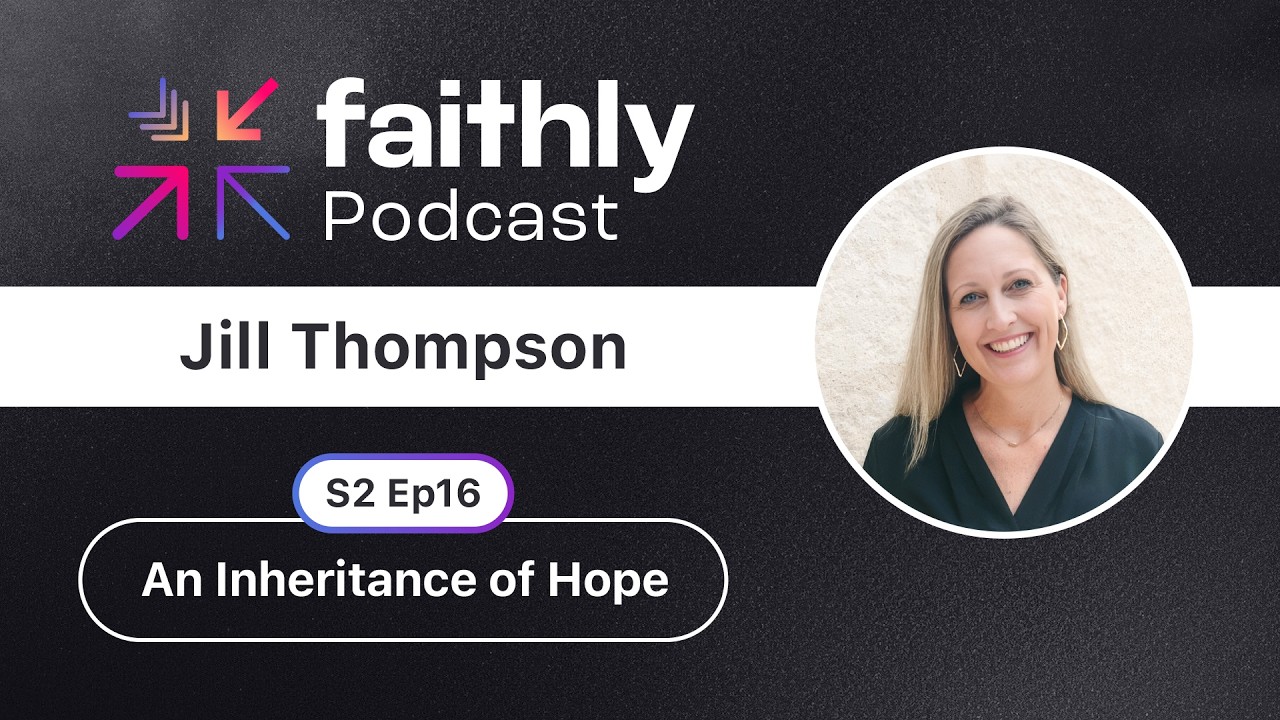


Living with intention in uncertain times is one of the greatest challenges we can face.Today on the Faithly Podcast, Alicia Lee is joined by Jill Thompson from Inheritance of Hope—a ministry supporting families facing the reality of a parent’s terminal illness—for a deeply moving conversation about legacy and hope in the midst of overwhelming grief.
Jill shares the powerful story behind the ministry’s founding, shaped by her close friend Kristen Milligan’s terminal cancer diagnosis at just 30 years old. What began as a desire to help Kristen’s own children understand life and loss has grown into a nationwide movement, serving thousands of families with care and providing lasting support across the country.
Together, Alicia and Jill explore what it means to build a legacy not just for the future, but in the way we live today, through love, presence, and an eternal perspective. Jill also introduces the concept of ‘jorrow’—the coexistence of joy and sorrow—and reflects on how families can experience both, even in life’s most difficult seasons. From Legacy Retreats to ongoing support communities, this conversation highlights the transformative power of showing up for one another—and the kind of hope that remains, even in the face of loss.
Website: https://inheritanceofhope.org/
(00:17) Introducing Jill Thompson and Inheritance of Hope
(01:18) Jill’s Friendship with Kristen Milligan
(05:13) Intentional Motherhood in the Face of Illness
(07:15) Redefining Legacy as a Way of Living
(08:38) Practical Encouragement for Building a Legacy
(11:35) How Inheritance of Hope Began
(15:48) Understanding 'jorrow': Joy and Sorrow Together
(20:32) How Families Can Connect with Inheritance of Hope
(25:44) How Jill’s Faith Has Changed Through the Ministry
(30:47) Kristen’s Lasting Legacy Through Her Family
(33:21) Resources, Legacy Videos, and National Legacy Month
Follow us on social media:
Website: https://faithly.co/
Facebook: https://www.facebook.com/thefaithlyco/
Instagram: https://www.instagram.com/faithly.co/
LinkedIn: https://www.linkedin.com/company/faithly/
X: https://x.com/faithlyco
17:00 - Introducing Jill Thompson and Inheritance of Hope
01:18:00 - Jill’s Friendship with Kristen Milligan
05:13:00 - Intentional Motherhood in the Face of Illness
07:15:00 - Redefining Legacy as a Way of Living
08:38:00 - Practical Encouragement for Building a Legacy
11:35:00 - How Inheritance of Hope Began
15:48:00 - Understanding 'jorrow': Joy and Sorrow Together
20:32:00 - How Families Can Connect with Inheritance of Hope
25:44:00 - How Jill’s Faith Has Changed Through the Ministry
30:47:00 - Kristen’s Lasting Legacy Through Her Family
33:21:00 - Resources, Legacy Videos, and National Legacy Month
God's intentionality and where He puts me and you and anyone listening will not go un-blessed, because it is. It's not ours. This is the Faithly Podcast. Today on the Faithly Podcast, I'm joined by Jill Thompson from Inheritance of Hope. If you haven't heard of it, Inheritance of Hope is an incredible nonprofit. It supports families who are navigating one of the toughest times in life when a parent is facing terminal illness. The organization was founded in 07 by Kristen Milligan, who had been diagnosed with terminal liver cancer at age 30. And she realized there were almost no resources to help families walk through that journey. So what started as her attempt to create support for her own children has grown into a national ministry. We're joined by Jill today who was Kristen's best friend and walked closely with her throughout that journey. Today she serves as director of public relations and she continues to help carry forward Kristen's legacy. Jill, welcome to the Faithly Podcast. Thank you so much for having me. I'm so glad to be here. So Jill, before we talk about Inheritance of Hope, I'd actually love to start with your friendship with Kristen. How did you first meet and what was your relationship like? It's so fun to think back to those days. We were both pregnant with our babies and she actually already had one, but I was pregnant with my first child. And we were new moms navigating that season of life, which is unsettling and unknown and sort of hectic, but also so fun and joyous. So we were both stay at home moms. We spent lots of days at the park in the library and mothers at preschool or groups and things like that. Just doing life as young moms, taking care of little ones. Both of our husbands were actually in the army and we were stationed, both of us were stationed at the United States Military Academy at West Point. So we were in the Hudson Valley area of New York. We lived in a really small town called Cornwall on Hudson and it was such a great place to raise kids. Obviously the army kind of moves you around, right? That's where our friends should begin. But interestingly, before I met Kristen, everybody I met in this town, they would learn my story, which I was in my husband was in the army. I have a twin sister. She lived in Florida near my parents. I signed for the deaf. I make scrapbooks. These things about me and everyone I met would say, have you met Kristen Milligan? Because once I met her, I realized we were destined for friendship. She also was a twin. Her twin sister lived in Florida by her parents. Both of us were from Florida, both of us married to army men. We both signed for the deaf and we enjoyed some of the similar things like scrapbooking and other things. So we had a similar journey, but it started in Cornwall on Hudson and then it continued even after we moved away. We got together at least every six months with our kids on trips and gatherings. And then with this ministry we're about to talk about, we spend a lot of time together with that too. Wow, that sounds like a very, very special friendship. Now when Kristen was diagnosed with terminal liver cancer at age 30, you were both raising very young children. What do you remember about that moment? Well, there's nothing like a terminal illness to really show you what matters most. To take out all the other stuff that gets in the way, your laser focused on really the most important things. And I remember the day she called me because her, her kids at the time were six months, two and four. And I had a 10 month old and I was pregnant with my second. And she said, you know, she had been losing weight. Dr. said, maybe it's postpartum or something wrong with nursing because she had this brand new baby and these two little kids. And she was like, it's not that, which I knew it wasn't either. But when they did this ultrasound of her liver, they found this massive tumor. And the doctor said, we need to get it out. It's pressing on your stomach. It's causing a lot of problems. And they scheduled it for the first available, which happened to be her 30th birthday. It was on her 30th birthday that she woke up from surgery and found out it was, it was malignant cancer. I watched her kids, her six month old had her first cold. I remember she had a snotty nose. She was very irritable by nature. You know, you have a cold, you don't feel good. But we were also like navigating this new news of like, what does this look like? What does this mean? It was scary, but it was also. It was a moment. I'll never forget because we really cherished every second. And from then on, I feel like I've been given that gift of perspective. And I can't wait to tell you more about Kristen's life and legacy, but just how that gift, which I know some people might not enjoy the term that I use gift, but there is a gift that comes with a perspective like that. And we got it. Yeah, absolutely. Well, so when you think back to that, what stands out to you the most about the way that she approached suffering and motherhood and faith? Well, I would say she was an intentional person before the diagnosis. My memories of her as a mom, she was very focused on being intentional with the decisions she made regarding discipline and teaching and training them. And you know, all of the things the books that she read to them, she was very intentional as a mom. But once she got the diagnosis, her intentionality just amped up to another level and she realized, you know, if if I have a timeline on my life, which we all do, by the way, you know, we hope it's 80, 90, 100 years. In her case, doctors were saying it was going to be significantly less. And she was thinking if I'm not going to be here for these big milestones, like, you know, their big birthdays or graduation or wedding days. These things that really as moms, you dream about with, you know, your kids, she felt like she was going to try to do her best to enjoy those moments before they happened and really be a part of them as much as she could. When I say intentionality, she took it to a whole nother level because she had this prognosis that came with some sort of timeline. Now, I will say she got nine more years. Doctors wouldn't have given her that much time, but she did live nine years after that 30th birthday, surgery. And during that nine years, she was given a lot of opportunity to be intentional with her time and that for me and for inheritance of hope, that was all about building a legacy that would last. And I could say if I were grading her, she got an A plus 100% on doing that. What did you learn about legacy building, watching her do it during that period of time? Yeah, well, I think, you know, prior to that, I thought when I thought of the word legacy, I think a lot of us maybe think of something you leave like when you're gone, right, which is true in the definition of legacy. It's how you're remembered and what you're what you leave behind. But really in her case and in a lot of the people that I've met and encountered since and in my own personal case, by building a legacy, it actually allows me to live better. So yes, I am preparing to die someday, hopefully long time from now. But I'm able to actually be intentional with today and actually live a more full and abundant life as well as, you know, building something that will outlast me, which is pretty cool to think about. Biblically, you know, there's a lot of verses that talk about living like Jesus. Well, I mean, his legacy is the best inspiration of all. He's far superior to Christian in that. But the intentionality that he took in his life, you know, that's how I strive to live so that when I'm not here someday, the things that people remember will be lasting and meaningful and important. And the things that are most important to me, I don't want to waste. That's something that even for folks who are listening who may not be facing terminal illness, those are things that we all ought to be thinking about. What would what would what's one or two pieces of really practical advice that you would give them about how to begin that process of legacy building today? Yeah, I love that question because I mean, we truly don't know the full impact that we have on people, right? We don't we don't get to see the future. I do believe God puts us in places and jobs and roles that he's highly God is highly intentional about where he places us. And we all have different mission fields. So for a children's minister or a youth pastor or someone who's out in the community may be doing disciple groups or small groups for neighborhoods. I think in the way that we interact with people, the things that we say in the way that we choose to behave and treat people. I think we can never go wrong if we try to behave like Jesus. That's a goal of mine for sure in ministry. I hope that's a goal of everyone. But I do feel like then God blesses that, right? Because he's put us there. It's his work. He's just letting us be a part of it. So I feel very encouraged oftentimes when I maybe walk away from a situation maybe a lot of ministry leaders. I know they they're in a grind. It's a grind. I know some days feel very mundane and very difficult, maybe even frustrating. And I'm just always encouraged that God's intentionality and where he puts me and you and anyone listening will not go on blessed because it's his. It's not ours. So I just want to encourage everyone intentionality. I know a lot of times when I talk to people, they're like, I have a long to do list. Lots of things to do. And now I'm listening to you talk about legacy. I'm feeling like I'm kind of failing. Like I'm not when we get into some of the things. There's a lot of different ways you can practically build a legacy for your family, specifically for young children, like making legacy videos. This is something I can't wait to talk about. Hopefully we get to talk about it in a second. But as you're personally thinking about how do I want to be remembered someday. But when you're not here, you don't get to choose. You don't get to impact people anymore. Your time is done. But right now you have the opportunity. God woke you up this morning and put breath in your lungs. So you get to have a say in how people remember you by the way you act, the way you speak, the way you treat people. So it's pretty awesome. I think God is the ultimate intentional example of living a life of purpose and meaning. So he blesses us where he puts us. Yeah, that's so beautiful. The biggest encouragement I heard in that is, yeah, what you do matters, but how you do it. That's legacy building in and of itself. I love that. Well, so let's go back to how the idea for inheritance of hope first emerged. Was there like a specific moment when Christian realized that what she was doing and building might be something bigger than just for her family. So when someone is diagnosed with a terminal illness like stage 4 cancer or ALS, it doesn't just impact that person. It also impacts their loved ones, their spouse, their children. And Kristen had a mother's heart, particularly for these young children she was raising. And she wanted to make sure that they were equipped to navigate this illness and her potential loss. And she specifically wanted them to have a Christian perspective of death and dying. So it started where she was looking for resources for her family. She wanted to find mainly some children's books to create a dialogue with her kids. And there was nothing. There was nothing from a Christian perspective. She thought, focus on the family, all these resource tools. There was nothing. So she wrote a children's book and it was about a family of trains and the mama train gets rusty and it goes to the big house with the toy maker. It was a beautiful story. It is a beautiful story. We still have it. It's called a train's rest or toy makers love. And that was just meant to be for her own kids. She had itself printed and she tucked it away for her three kids. And then she began going to chemo and radiation and things and she met a lot of other families like hers with young kids. And she realized there were so many families that needed these resources. And so that is where inheritance of hope was born. It was about midway through her nine year journey with stage four liver cancer. Her husband quit his full time job in the army. And he started they started inheritance of hope together. And it was out of this heart of a mom trying to take care of her kids and realizing there's other moms and dads who need these resources to help their children and their loved ones prepare and themselves prepare for that. That fun. Wow. Well, so you've been involved since the earliest days. How has inheritance of hope evolved and how is your role evolved? Yeah, it's so interesting because those first few days the early days. So our signature offering back then and it still is a signature offering, but we've grown our programs is called a legacy retreat. And we bring together families from all over the country who are navigating terminal illness. And we have small groups for the kids and teens and caregivers and parents. And then they get to make memories. They get to laugh and have fun and enjoy each other as a family. And we take care of everything. Their meals, their tickets, all their fun. We go into parks and we go camping. We do all sorts of things. They have volunteers that take care of them. And so in the beginning, we were kind of like begging families to come and try it. We promise it's going to be great. We background check all our volunteers. They're well trained. But you know, it was a little bit like, is this a real thing? Like, what are the strings attached? You're giving me a free trip. Like, I don't really know if this is. And now we have a waiting list of about 300 families waiting for legacy retreats. I mean, we have grown to be a reputable quality word on the street kind of organization where families after they encounter us are going to tell everyone they know. That's in the same situation. You have to experience this because it's life changing. And I'm proud of that. I feel like that's a pretty awesome way to be known. And also that we're coming alongside so many more families now. So through legacy retreats and then also through online support groups that we've developed called hope at home groups. And then we also do some local gatherings in different cities around the country as well called hope hubs. So all those programs have grown over the years. And Kristen, when she passed, we had served 100 families. And now I think we're over 3000 families. So it's pretty awesome. Wow. And these the retreats and the home offerings, the groups are these nationwide. Yes. Wow. That's that's really incredible. So one of your core ideas behind all of the products, all of the offerings you have is helping families enjoy or experience both joy and sorrow at the same times. I think I've heard you refer to that as Jaro. What does that look like in practice for families? Yeah. I think most people who hear that might think, is that even possible? Like how can that be possible? But probably most people in ministry can recognize that that is the picture of the Bible. I mean, joy and sorrow coexist. They are not mutually exclusive. We coined our own term. You used it already, Jaro. I'm giving everyone permission to start using it. But we did trademark it because we feel like it is so valuable for people that are going through suffering to realize this is not all there is. And you know, I even think about Jesus like for the joy set before him endured the cross like the cross is the ultimate suffering. The joy comes in this eternal perspective and in the fact that happiness is depending on our circumstances, but joy is not. So our circumstances can be pretty rough and we can still experience this joy on legacy retreats and all of our programs actually. We see Jaro in action pretty much every day. One of the groups that I lead online on Fridays. There's frequently laughter and tears within the same story even because we're experiencing death and loss and sadness. But we also have a greater hope and we also have sweet legacy components of these people too. There's lots of places that we find a joy in the sorrow. Yeah. And how important is community in accessing that Jaro? What happens when families realize that they're not alone in this? Yes, that is the critical piece because unfortunately there are one in 20 children will face the loss of a parent before the age of 16. Wow. One in 20 is that right? Right. So we interact with a few other organizations that specifically serve the children and they actually use the statistic one in 15. So we're more conservative in our statistic of one in 20. But regardless, like that is a staggering statistic. It's every classroom. Basically, if you look at your children's classroom, one of at least one of those children will experience the loss of a parent before they turn 16. And this is just from terminal illness. So we're talking about stage 4 cancer, ALS. I unfortunately in my line of work know a lot of these families. So this statistic is not surprising to me at all. But I encourage anyone listening to just consider your kids soccer team or their classroom or your street, your neighborhood. It's probable that you know there is a family that's going through this. So it is extremely common. And we know that many of them feel isolated and alone. Even if they're surrounded by a loving community, it's a very isolating feeling when you're a five year old and your mom lost her hair to chemo. Unless you meet another five year old and then you're like, oh, your mom also has chemo. There's such a sweep on that happens through our programs when kids and teens and caregivers, oh my goodness, the caregivers who are desperately loving their person through this really hard thing when they get in a room together. And they say, oh my goodness, parenting was hard enough. Now we have this terminal illness to deal with. We have to like end that group every time those caregivers are together. We're almost like forcing it to end because they are so tight with each other and they're spread out all over the country. But they have true community that is, you know, they have their buddies in their neighborhood and on their golf teams wherever they go for fun. But it's different when you're in a room of people who really get it and they're walking a similar journey. So regardless of the age, you know, from the littlest kindergarten or all the way up through the caregiver, I feel like in the diagnosed parent, they need each other. And that's the community that we provide, which is essential like you said. Yeah, wow. Well, so as soon as you started going through the statistics and talking about your neighbors, kids on your sports team, I know where listeners are thinking right now and some of them may even know someone who's in this exact situation. How do people get families plugged in? And do they have to be Christian families? Yeah. So to answer your first question, I would say the best place to go is our website, which is inheritance of hope dot org. And on there, you can see all of the programs that I mentioned, each of them have different registration forms like the legacy retreat, the hope at home groups and the hope hubs. Those are all accessible on there. If you are a person who wants to refer someone to us, maybe they're not in a position to register themselves just yet or you would like for them to get more information, you can go to inheritance of hope dot org backslash refer. And then you can put in your information and their information and we'll reach out to them and we'll answer their questions and give them some more information. So that's definitely one tool and then I also say as far as if their Christians are not probably more than 60% of the families we serve are not Christians and we are very, we serve families of all faiths and backgrounds. We don't turn anyone away. We are, we are of the mindset that we are going to love everyone and we're going to love them as Jesus did, which is neighbor as self. We are going to make sure that they feel loved like God's favorite child, which is another term that Christian often used when she was navigating some of the hardest days of her journey. She talked about we would lay in bed. She wasn't feeling well and she said, I feel like I'm God's favorite. And it was because of the way that he loved her through people and through circumstances and through songs and different like nature. And people would hear that and be like, she's dying of stage 4 cancer. She feels miserable that she can't get out of bed and she's saying she feels like God's favorite. And that is a miracle, but we want everyone to feel that way. So we hope families come that aren't Christians. We hope all families come that need this service and we are going to love them and hopefully change their eternity. Wow. So I would imagine you get to see firsthand seeds of faith get planted through through inheritance of hope. Is there a story or a moment after all these years of serving in this way that has really stuck with you that really shows the kind of eternal impact this ministry has had on people's lives? Oh, there's so many. I think I'm going to go with the story of Tesla Davis. She was diagnosed with ALS when she was 28 and her daughter was one. And unfortunately her marriage dissolved the beginning of her illness and her husband left. So she was a single mom and I'll never forget her her faith. She she was very new to faith and she found inheritance of hope. Actually, well, I'm going to say that's right. She was she was very new to her faith and we served her and her daughter on a legacy retreat. And through her community with inheritance of hope, her online support group, her legacy retreat, the volunteer that served her family, her faith grew and she became quite an encouragement to those around her as her body wasted away. Literally, I don't know if everyone knows about ALS, but you lose the ability to use your arms, your legs, ultimately then you're breathing in your speech. And even in her last two years of life when speaking was hard, she could use her eye gaze and type in the chat and encourage her fellow diagnosed parents and encourage the people that are in her group every week. She used her bed as a platform to share Christ with others and she became really close with a dear man who also had ALS has ALS. He is still alive. He is very dear to me too. And he might listen to this. I don't know, probably not, but he doesn't quite know Jesus yet. And Tesla was so determined to encourage him. ALS is hard. It makes you angry and afraid. And I get that. It's a horrible disease. But I love how Tesla used her terrible situation to share the good news of the gospel of Jesus. And when she went to heaven in August, I have no doubt in my mind. She was dancing and singing and running and playing and being her crazy self with a fully healed body. And the rest of us are still here. We got breath in the lungs today, right? So we're going to keep leaning in towards her friend who, oh, I hope he's listening to that. And then her sweet daughter who's now eight, who also loves Jesus and tells people about him. So I think that's a pretty awesome story. And I do think inheritance of hope played a huge role in helping Tesla grow in her faith and learn what it looks like to experience jarro. She taught us a lot too. I have to say. Wow. Wow. So you have personally seen hope emerge in even these darkest of moments. You were already a woman of faith, right? When you met Kristen and walked this journey with her. How has your faith changed over all these years? Well, I do think when you experience and you face death as frequently as I do and people in my work, you can't help but have an eternal perspective. I couldn't, I couldn't still be doing this 15 years later without that because it is devastating. It's hard. It's sad. There are so many times I read the verse that talks about no more peer, no more tears, no more struggles, no more sickness. And I'm like, I cling to that because it is the only way to take the next step. It's the only way to keep doing this work. And whenever anyone comes up to me and says, how do you guys do this? Like this is so hard. Well, it is, but it's also super rewarding when I consider all the people I'm going to see in heaven someday. You know, there's going to be a great reunion happening. But I think without it, there's no way I could do this. But my faith has grown. And I've also changed what is really most important. The perspective that I talked about at the beginning, that's a gift that is definitely true for me. I have four children and two of them were born in Ghana. They came home when they were 11 and six. And at that time, my biological children were 12 and seven. And so now they're all in their 20s, 18 to 24. And I realized, as I was talking to them now, as their older, their whole lives, they knew Miss Kristen, Miss Kristen had died. They know her kids were very tight with her kids. We've been in their wedding, you know, all the things. And their perspective as 20 year olds, which what a gift is so strong in the sense of what matters most, the things that are most important, the eternal perspective, the gospel of Jesus being the critical peace, which I feel like that was a bonus that I didn't even consider that my children were going to be raised in an environment where death isn't the worst thing. It stinks. Yes. But it's not the worst thing. And we can go through it. The value of the shadow of death and not be alone. God is very near. When he says he's near to the broken hearted, it is very true. So I love that extra bonus that my children and others get to experience too. Wow. It's all part of Kristen's legacy and your legacy going back to intentional legacy building. You're seeing it, living and breathing and walking in your children every day. I also want to talk about Jill, how your role has changed and inheritance of hope. So you're the director of public relations. But you've also you've talked about, you know, your running groups, you know, you're supporting people, you're in their lives. What does your job look like day to day? Yeah, it's funny to think back those early days. I mean, it was Kristen and her husband Derek and myself and maybe two others. Now we've grown as a staff. So I used to plan legacy retreats, everything from coordinating the meals and the tickets and the families. And then, you know, it evolved over the years. And now somebody told me my title needs to change. They said, anyone can learn how to be a public relations director. But really what I'm doing is trying to share the heart of our ministry. And so, yeah, if someone has a better title, I think I'm open to that, to be honest, because I really want to be the storyteller in chief. I want to be the person who's telling these stories that you're allowing me to share today. To number one, raise awareness for inheritance of hope. I really are prayers that it would be a household name so that when you encounter a neighbor or a friend or a sister or somebody who is experiencing serious illness, you immediately think of inheritance of hope. Kind of like when a kid gets sick and everyone says, make a wish, you know, it's a family name. It's a household name. Everyone knows it. That is my heart for inheritance of hope. So that's my first goal. And my second goal is to inspire everyone as they wake up this morning to be intentional with the time they have to be able to build a legacy that will last. Because I think that is super important, whether you have a diagnosis or not. And so those two things, if there's a title that can better amplify, I don't know, public relations director is the current title, but we have changed it quite frequently. No, I am open. So Jill, Kristen passed away into that we've talked about her legacy and how it continues to shape thousands of families today, including yours. What do you think she would feel today if she got to see the impact of this organization now? Yeah, I mean, I think she kind of knew she trusted God so fully when he said, Hey, you're going to do this thing. I think she knew he was going to explode it because well, she was just open handed right with her life. And so she took the steps of obedience that he asked her to do. And then she left it in his hands. And when you leave something in God's hands, like, it's all good. So I think she knew, even when she died, that inheritance of hope would be something that would honor God. And I think she also knew that she had done a good job with her kids. And so she would have become a grandma last week, her middle child, her son, his wife had a baby last week. And it would be her first grandbaby. And I'll tell you, I've had all the feels. I've definitely been feeling just this like, I'm sorry. She would have loved to be a grandma. And I'm going to take a minute. I just feel so thankful that because of her intentionality, her daughter-in-law got to meet her through a video, a legacy video. And her now grandson, who shares her name, her maiden name, his name is Grady. He gets to know his grandma through these things that she intentionally did, videos that she made, and things she had written and gifts she had purchased. And so I just love that she's still a part of their lives. And even this brand new little baby, he's going to get to know his grandma through all these things she did to build her legacy that lasts. So that's really rewarding. And so I'm so thankful for that. I miss her. You know, there's still times I pick up the phone to call her. It's been 14 years. But I have a picture of her I'm looking at on my desk every day. And I love that this is part of her legacy. And like you said, I'm building my own too, which is really special. So I think that is probably the perfect place to leave this conversation for now. Thank you so much, Jill, for sharing your story, for sharing Kristen's story. You mentioned that the inheritance of Hope website is the best place for people to check out what you're doing, what you are offering, anything else you want to share with our listeners in terms of other places they can follow along with you. Yeah, we're on Instagram and Facebook inheritance of Hope. You can definitely follow along there. We do have a free app. It's called hope at home. And there's lots of resources there. How to talk to your children about death and dying, how to navigate end of life, also how to build a legacy. So May is our founders day. And it's also national legacy month. And so this is the time every year in the month of May where we challenge everyone to consider how they're building their legacy. And if they're living in such a way that matches how they want to be remembered. And so we have a lot of resources for people both with illnesses and without. So like literally anyone listening to this podcast in the month of May, it's you can go to national legacy month.org. It's also linked on our website, but there are resources to help you really think about intentionally leaving a legacy and what you're building right now on things like making a legacy video, which we believe everyone should make a legacy video and we have trained coaches that are ready every day of the week. If you go on our website, there's a calendar you can choose a day that matches that works for you. And you can record what matters most to you. It can be short or up to 30 minutes and it's free. There is no cost. Everyone can do it. And we feel so strongly about everyone thinking intentionally about their legacy that we offer this to anyone. If you'd like to do that, especially in the month of May, it's a perfect time, but really any time during the year, please check out the website and sign up to make a legacy video. We are hoping that everyone in the month of May will make one. Maybe you can make several throughout the course of your life, but give it a start. And then I'll also just encourage everyone as you're referring families to inheritance of hope. To be prayerful about them as they build their legacy, they might have very limited time. And something that a lot of people like to do in the month of May, especially, is build your legacy and give a legacy. So sign up to make a legacy video. And there is absolutely no strings attached and no cost. But if you also like to help a family make a legacy video, we're encouraging everyone in the month of May in the part of building their legacy of service to consider even maybe like $5 a month for inheritance of hope so that we can serve families and continue to help them build their legacy. That's wonderful. National Legacy Month dot org. We'll be including that in the show notes, Jill. Thank you so much for again, sharing your story and sharing with us about this beautiful ministry. I'm really looking forward to following along as you grow and have impact all over the nation.