

 Amazon Music
 iHeartRadio
 Apple Podcasts
 Spotify
 Pandora
 YouTube
 The Surprising Lessons Amazon Taught Me About Faith and Tech - Chris Lim | Faithly Podcast
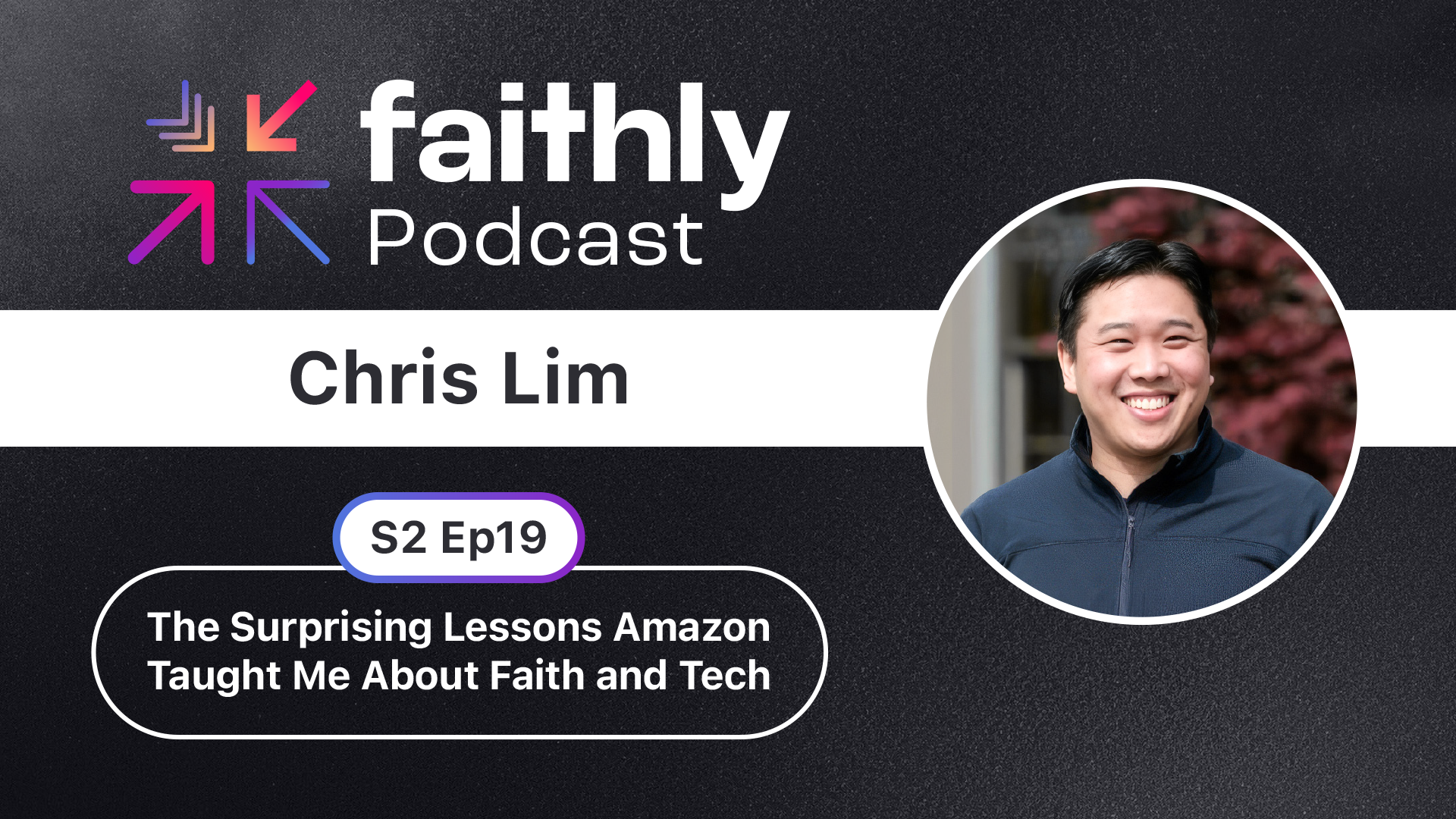
In this episode of the Faithly Podcast, Alicia Lee is joined by Christopher Lim, founder of TheoTech and Spiffio, to explore what happens when a passion for technology collides with a calling to serve the global Church.
Chris reflects on his journey from studying computer science and working at Amazon to building technology designed specifically to serve gospel-centered mission. Along the way, he shares the personal and spiritual challenges of leaving behind stability, status, and professional success in order to pursue a deeper sense of calling and dependence on God.
Together, Alicia and Chris unpack the rapidly evolving world of church technology—from AI and “vibe coding” to multilingual accessibility and prayer-focused platforms—and explore how these tools can empower ordinary believers to participate more actively in ministry and innovation. At the center of the conversation is a compelling question: what if technology was designed not merely for profit or efficiency, but with God as the customer?
Website: https://www.spf.io
(00:21) Welcome to The Faithly Podcast
(01:13) Programming, Computer Science, and Machine Translation
(02:34) A Desire to Use Technology for the Gospel
(05:49) What If God Is the Customer?
(06:14) Leaving Amazon to Pursue Technology Entrepreneurship for the Gospel
(08:42) Identity, Status, and the Cost of Obedience
(11:56) Ceaseless and Building Technology for Prayer
(14:09) Building Church Tech and Learning Through the Marketplace
(19:29) The Unique Opportunity of AI and Vibe Coding
(25:55) What Spiffio Does for Churches
(30:20) Serving Multilingual Congregations
(35:16) The Redemption of Technology and the Global Gospel
Follow us on social media:
Website: https://faithly.co/
Facebook: https://www.facebook.com/thefaithlyco/
Instagram: https://www.instagram.com/faithly.co/
LinkedIn: https://www.linkedin.com/company/faithly/
X: https://x.com/faithlyco
Also see there's a lot of redemption of technology in the world that God is also using it to fulfill getting the gospel to every people every language every nation and then the end will come. This is the Faithly Podcast. Welcome to another episode of the Faithly Podcast. I'm your host Alicia Lee and I'm joined today by Christopher Lim. Chris, you have such an interesting background. Where did you grow up? How did you first get interested in technology and in building stuff? Thanks Alicia. I grew up in Seattle and I think that my affinity for technology really came from the fact that my dad had a laptop and I had access to that as a kid and I just wanted to hammer away at it the same way that he I saw him doing. He was from the University of Washington Computer Science and he also had a Commodore 64 and just a lot of other kind of gadgety stuff that I really took to I think and enjoyed figuring out how to make it work. So that's really how I got into the digital technology world and then middle school was programming TI 83 plus calculators in school to help me do math homework better and it just it was really I think the feeling of being able to teach this device something and have it repeatedly solve that problem for you is pretty addictive. And having it solve more and more problems and a repeatable you know reliable way really kind of got to me. But to answer the question about how I ended up getting into the technology industry. I went to University of Washington did my undergrad and Masters of Green Computer Science did some research in machine translation as an undergrad and as a grad student. And it was really driven actually by this occasion where Wycliffe Bible Translator missionaries came to my church presenting about the need for translation of scripture into languages that don't have it. And I was a little bit behind the ball on having something prepped like an internship or something for that summer. And when they shared that about a week or two later there is an email on our email list from a professor asking looking for undergraduate research or to do machine translation so I interviewed with her she accepted me. And through that I kind of got into the world of machine translation using AI to do human language translation and finding ways to see if that could accelerate Bible translation so that's how I got kind of into the specific world that you know I now inhabit post post college post my master's degree. I had wanted to start a company actually that could do that could use technology to advance the gospel and I had actually done some business plan competitions under a different professor my department who was a serial entrepreneur. But at the end of that of that time the professor just kind of sat me down said Chris you know I think you need to look for a job because this is going to be really difficult and expensive to commercialize. And I was just basically completely disappointed heartbroken I took my resume to the career fair and basically my heart sank the moment I handed it to the first recruiter as like this is not what I dreamt of this is. But okay like you know God I just I guess my goal will just be to serve you faithfully wherever you send me so I did all those interview rounds and even after I got couple offers including one from Amazon at the time Amazon was really focused on retail. And AWS was not the big business that it is today so it wasn't really viewed in the industry I think as a as a real tech tech company it was more like you know an e-commerce platform. And back then I think Google is in this hey day so Google is like everybody wants to go to Google but that offer for Amazon you know I thought about it and I felt led to do that and I also liked working for a company I think where it was so concrete what we did was that we help people to get. Quality products at a cheap price in a convenient way and it's like okay like if my skills are helping to do that I get something I can get behind. So I went to Amazon and I ended up creating a Bible study there called the theotech discussion group theology of technology discussion group with other Christians in the company really just wanting to integrate faith and work in a very you know very concrete setting. At Amazon we all know the pressures that were under as colleagues in the company company culture and all those other things and so it made for a very fitting kind of discussion group and we also I think we were a group of people who wanted to think about how our faith impacted our work. And the big thing was a series that I did called succeeding at Amazon as a Christian where we began with Amazon leadership principles that go into every single performance review. You know it affects compensation everything like that those leadership principles and seeing how they align or don't align a scripture and so we did a series of studies about that and you know one of the principles is customer obsession leaders begin with the customer work backwards and one of the reflection questions that I'm going to do. One of the reflection questions from that question from that point was really if you're not obsessing over your customers who are you obsessing over. And my answer would be myself you know it's I'm obsessed over my needs my desires my goals all those kinds of things and so this leadership principle of customer obsession is actually a way that I learned to love my neighbor as I love myself and it's reinforced by a company culture where that's stated principle I may not always live up to it. And secondly it's also reinforced to the incentives of the of the compensation structure so that's one example of a surprising discovery I think where like hey like this is God's commandment to us and God could be making disciples in a sense unintentional to the company but in God's design through things like this leadership principle. The big thing for me though was where I asked the question and what if God is our customer what if we obsess over what God desires and work backwards to invent technology other things that deliver the outcomes that God wants. And that question is the one that stuck with me so I basically one random evening in my home while a friend was having a book club upstairs or whatever like that I just felt the Lord prompt me to Chris I want you to leave your job. To vote your attention to the purpose I call you to and trust me to provide for you and I understood that purpose to be technology entrepreneurship for the gospel which meant making God the customer technology means inventing new things that deliver those things that God desires entrepreneurship means taking responsibility and to end I'm not just. I really enjoyed research but I didn't want to be an academic because I felt like that research work didn't go all the way it didn't go all the way to having the impact that I wanted to see on other people and so entrepreneurship for me meant kind of taking responsibility for that end to end. And so technology entrepreneurship for the gospel I wasn't sure if that was the Lord if I was just really tired and I prayed for a season of discernment and ask Christian friends and other things like that about you know this is what I feel like God might be leading me to do and many people were very sincere and telling me like you know like maybe you should just do this as a side thing. And then after it becomes after has traction then you can make the jump and but as I reflected on that as I was discerning that and asking Lord Lord like this is the things I'm hearing what is it that why maybe I should just do that maybe I shouldn't actually leave my job is that really from you that I should leave and in my spirit you know the question came up was really what is that you can't do on us you leave. And I thought about that and for me the answer was you know I can't discover for myself that trusting and falling Christ in his calling on my life is better job security than just sticking in my hands on job I can't see I can't see that the glorifying God this way is actually worth more than having a stable career and you know doing this thing on the side is good cause on the side or something like that. And so it became my conviction that like okay Lord I want to see for myself that in the highs and lows of this whole journey that Christ is enough for me and that your calling is actually a what's worth pursuing so I told my manager I give six months notice not two weeks my whole team at Amazon knew what I was about and they didn't fully understand not not many were Christian but like oh Chris is going to do some Bible technology thing or whatever like that. But they were incredibly supportive send me off with a big farewell party and even my manager that whole six month period was just like hey you ever change your mind like totally would love for you to stay and I I did six months just to get the you know another set of stocks vested or whatever and then I left I left Amazon and it was a huge change I never realized. How much my identity was tied to my status as a as a you know tech professional in a really well respected company after I left Amazon and I would try to explain what my business the tech was about I feel so ashamed I didn't want to talk about it it's like I have nothing to show for it I felt like these are just aspirations these words they just wishes and all that status and confidence that I had prior was just gone. And it was and all I had was like God I think you call me to this but I even that's like I think like it was just so like difficult to talk about what I was about. And so there was a big change that that you know kind of had to take place in me over the course of years in an entrepreneurial journey. And the first thing that happened because I was gun hole ready to kind of go out the game start doing this thing I got a ear infection that actually made me bed ridden for a month. And after I left my job I also had to switch to the state based health insurance stuff and so like it was just like crazy time and it just honestly I look back at it's all spiritual resistance but. But that was insane to have so much enthusiasm and to be knocked down as the first thing that happened after I left that was insane. Wow and not just like a week like a traditional but I actually lost my hearing in my ear because my ear drum burst from the from the damage of that thing healed now so that's praise God for that but. Anyway I got connected probably actually with a person who was trying to do Christian hackathons around the country called coach for the kingdom his name is Chris as well and through him we kind of collaborated and I got involved in hosting code for the kingdom hackathons which was at the time away that I viewed it as helping people to do what they love with technology for a cause that matters I was the language that I used back then giving technologist a vision for how their skills could be used for God's kingdom. And I think that that was really wonderful from a community perspective it was really wonderful and we brought people together who like friendships and things like that that wouldn't exist otherwise. And so that was the season of my life and at the same time through that process I saw that the ideas that are percolating they really take entrepreneurship to take them anywhere like it's it's great to do it's great for activation to do a hackathon but to actually bring it to market you have to have. Entrepreneurship and so there is and so that's how really eventually as I stepped away from code for the kingdom spiff you which is the stuff that I do full time now. I became the emphasis of what I do but just to just to set up our conversation the idea of customer obsession how it applies to my company my products that I build and stuff like that the first example was that we produce an open source prayer app called ceaseless meaning and it really was driven by. The text I think was it in first Timothy where Paul's urging the believers to pray for all people especially those in power and the idea there was that as naturally. You'll see it with my theology in it or just even my own life I was finding my prayer life is just so self absorbed you know it is largely about me and so it's actually really difficult to pray for other people it's just naturally difficult and I also saw that if this is what God wants speaking through the possible can we just acknowledge to help. To fulfill what God actually desires so the first prototype you build ceaseless was a prayer up that the integrated Facebook and showed you three of your friends to pray for every day and I can't you know it's the honor system I can't promise that everybody was pray for literally but just with the bite of beta pilot we had 60 people I think doing it and. After a few months we personally prayed for more than 20,000 unique people wow it was just insane and it's also very personal this is not. Praying in the abstract in the general user for people that you have a friend connection to. And it also surfaces people who would never ask you to pray for them because you know in church you might have you know small group or something but then like most of our connections are not people who would ask for prayer so that was incredible. And we made ceaseless from that idea into a mobile app for iPhone and Android at the time open-sourced it and it's really kind of driven by the idea that if God's the customer then let it's not so much about me managing my prayer list it's actually. A tool helping me to fulfill the way that the things that God wants me to be praying for and we tried to design it in a way that wasn't it you know wasn't trying to be addictive it just showed you three. You know it's not an endless feed three every day but over time as a community we can pray for personal prayer for everyone on earth that was the that was the big dream and so. And so that's that example of like you get a different kind of product. When you obsess over what God wants and not just work forwards from human center design let's say of like well I'm a human I want to pray so I need to manage this request you end up with the two list kind of. And maybe some sort of meditation experience we were trying to do something that was different but really just different from that text in scripture to help us fulfill that wow that ceaseless and that's in the kind of very clearly faith world. It was an open source project volunteer you know there was there's no paid planner like that so I think that we could revive it in this age of vibe coding and probably. You know make it really really modern now but the thing that I am now doing is spiff you you said a lot of really interesting things that I would love to dive into. First of all you and I are both building tech in the church space but we started in very different ways I love what you said I don't think I have. You've heard anyone use the word ti 83 in like 20 or 30 years I love that you said ti 83 I didn't know that you could program it yourself but like you have technology and building in your bones which I think is so interesting and so needed I want to ask you about. You when you enter the workforce you your dream was to build for the church right and then God sort of steered you into the marketplace which is very different from my experience I my dream was to work at Goldman Sachs which is where I started my career wasn't until later that I had a new dream for building for the church but you talked about disappointment right why do you think God had you start at Amazon do you think you needed that experience before you could build for the church. Absolutely you know I went to a great computer science school one of the top in the world University of Washington but the difference between being a good student in that setting and actually building internet scale software that's production ready that you have on call for and sustain for hundreds of millions of people around the world it's a really different. Game and I could never have actually learned real engineering if I wasn't in Amazon I had to rub shoulders with professionals who had experience who knew the real situation and I also my mind had to be open to what internet scale really meant because if you think about it if ti 83 plus that's one calculator one program for just me. And and then later you know let's say that you know Google came up with gmail and stuff and it looks it's just a fantastic consumer experience and stuff and that's what you kind of aspire to build or if you were really into games like you want to build games like people would love to play all makes sense at Amazon I it's already long enough in the past that this is no longer you know confidential or anything like that I was on a team that was doing selection monitoring where we would actually crawl the internet and try to find products that Amazon didn't have yet because it's a great thing. Because Amazon had the vision of earth's biggest selection and then automatically using AI to match those products against our catalog and then for the ones that we don't carry surfaced into vendor managers who could then source them. That's an insane application of technology like coming out of coming out of even grass like I would never have thought of like oh wait we could build internet crawlers not so that you can search the internet to find information the way we do with Google but to specifically increase your product selection in your catalog. You know in this automated workflow and process and everything like that. That's crazy. So like yeah we like the school the skills I gained in my degree were still necessary. But the engineering discipline and the internet scale thinking like thinking thinking big is one of those leadership principles could never have learned except for in an environment like Amazon. I think the cultural aspects as well like the leadership principles right like how do you like customer obsession is not something you're taught in school. That's something that you can't even be taught in theory it's something that you have to experience in a community in culture and actually one of the conclusions of our theology of technology study around this was that. Christians are a gift Amazon why because in many ways these principles line up with our faith and so we actually become a gift because when the company doesn't live up to its own principles we're like witnesses calling it back to what is actually what it's actually about and living that ourselves imperfectly. But we are actually net contributors to Amazon's own culture in that way because of that alignment and we are also beneficiaries of it because I don't know about you but in the church world. Churches are not an idealized thing they're messy they're human institutions and we get a lot of non customer obsession and non got obsession we get a lot of self obsession and a lot of you know other things as well. And if that's the culture you're immersed in it is very heavy you know but to be surrounded by people who are moving in a similar direction and who are trying to. You know another principle is disagree and commit you know and it's trying to create a true seeking culture rather than a social cohesion based culture. These are all big concepts we could talk about more later and there's a lot of other material out there on the internet but it's so it was surprising to me to see. The degree to which those aspects were essential to becoming who I am today and to being an entrepreneur and to being an entrepreneur who's seeking to serve the lord with these gifts and technology. There is so deeply in grain now that your answer your question shortly it's like yeah it's essential there's no way that it could have happened. I couldn't have done it if I done it straight out the gate of college yeah yeah thank you for sharing so honestly about your journey. And how far you've come as a technologist and as an entrepreneur something that I've heard a number of times from church leaders is there are people who feel like they've been called to ministry where they don't always get that opportunity to minister right away. Sometimes there is a different journey that the lord has people on before he has them fully step into their calling so I think that your story is an encouragement for people who may not be doing exactly what they feel like they've been called to. Something interesting about ceaseless your prior church tech project you said you know it would be easy to revive in this moment of vibe coding and everything else going on can you talk a little bit about what you think is unique about this moment for building tech in the church. Yeah I think that the biggest empowerment is that the people who are closest to the pain point that they're trying to solve are empowered to build the solution themselves. The feedback loop that we normally have to that we used to have to have a whole pipeline to do you know with pms designers engineers and everything like that has been compressed for a lot of use cases so they can happen in the mind of the person who's actually experiencing it. That's incredible they're going to be more effective that in many cases than a team or company could be at kind of shaping the solution that will really solve their unique problem and and they can do that with natural language they're speaking they're talking they're writing they're explaining they're trying it out and so that. That to me it I will see there's always a period of explosion and then consolidation but to me it feels like this is that explosion season where you can have a thousand 10,000 flowers blue. You know church leader is facing some specific problem that can be solved in a digital way doesn't have to depend on a vendor to invent that for them by giving feedback they don't have to depend on an IT guy they don't have to depend on they can do it themselves and so you can press that deeper and deeper down to the front lines where the problems are. And and get solutions that are better because you're just skipping a lot of those translation layers that's what I think and so it's also interesting I think that everyone's trying to figure out how to use these tools effectively right and and everyone has different goals for what the tools do so the biggest pitch right now for. Replit levelable and other things like that tends to be that you can build businesses now off of this right like people who couldn't before can now do this and that is definitely one one purpose for these tools right to make money definitely a purpose. But I think that there's room for that conversation around like the theology of technology and in a church space it's not the goal isn't always to make money like you have a different business model anyway it's through giving right. And so it's just it's interesting because you can always take it at the primitive level which is like problem solving like do you have a problem can you solve it but then you can take a little bit past that and not go in the direction of business and think about well what would it look like if I'm just going to make something up you know our church for example has all these really cool volunteer projects and stuff like that that people want to do but our processes for doing that are so either ad hoc or so formalized like you have to do all these committees or whatever like that to be able to get an idea to be. Endorse by the church is there a way that we could streamline that so everyone can be submitting these ideas you know into some digital tool that we can vote on together as a community and then the ones that you know surface to the top become the thing that we you know we just kind of endorse and push forward on and so everyone's empowered basically. You can vibe code that now you don't need engineers and you don't know you don't need giant $100,000 budgets to build that even in a mobile app form you know and the use of the church could even be the ones who. It basically become oh I can vibe with that in a weekend and here you go we have this app now it's just incredible the amount of empowerment that exists now and I think that the real gift from ethologically the real gift of that is the priesthood of all believers you know that it the church was and this is this ties into to faith in work and everything like that the church was not meant to be that you have the you know the formal clergy that's doing the ministry and then the lay people are just funding it it's a very kind of broken model and I think that the reformation. Partly changed that but there's also opportunity for a second reformation now where before the reformation kind of broke the monopoly on scripture right where only only the authoritative scripture in the not even the vernacular language is going to be the what's truth. That was the monopoly on scripture and then the reformation although had many controversies had conflict violence and other things like that at the end of the day people got scripture in their language. That was powerful and then you had the printing press as a technology that disseminated that and revolutionized the whole world day with these tools we're having a moment that's kind of like that in a different sense I think I would say that the church has had a monopoly on sacred labor on what's what's considered ministry on what's considered serving God. Versus the secular work that isn't or that is sort of but it's just a means to make money so that you could do this or you could do vangels in there etc. I think that there's some witness that we see through these five coding tools and through the way that this technology is kind of empowering people who didn't have that ability before where it kind of reinforces the metrics like no like you actually are able to serve God and to do these things now like your ideas can become real. You don't have to get it approved by the hierarchy or whatever like you can just go and build you can just go try go put it out into the world tested against reality see the difference that it makes. That's a very kind of you know Silicon Valley tech kind of perspective just go do just go build it. But it ties in again I think with that priest of all believers like if we're all priests who mediate the mediate God's presence into the world and God's praise back to God then literally that is our vocation. Like we get to go do that in the world so. It's an exciting time because that message is now being reinforced with the technology. It was always there and we could always have that attitude but now it's like it's actually extra reinforced by what's possible. So when I asked you that question about you know AI and software development and vibe coding I wasn't expecting you to bring up this analogy to the priesthood of believers which by the way here at faithly we fully imagine. When we built the faithly platform we built it for the entire ministry ecosystem which I have always understood to mean all believers. That is an incredibly deep thought about where we are in software engineering and technology and where we are as the church and as the the priesthood of believers thank you for that. I want to I want to now segue into Spifio can you tell us in clean English like what is Spifio today what is it do what is it do for churches. Yes Spifio is a platform that lets you make your worship services translated to many languages people can show up scan a QR code pick their language on their phone listen to it read the translation. You're able to display up to four languages on public displays which is really helpful for setting the mood or the environment the vibe of the place you could say. And we also integrate with streaming platforms like YouTube so you can show translations in other places as well. So that's like the live real-time translation aspect of what Spifio does and then we also do content. So if you have videos like this one or articles books you want to translate to other languages Spifio has a platform for that and the last piece is conversations. We have software that makes it more seamless to have a conversation with someone in our language that kind of rounds out the piece. So instead of thinking of it as a point solution for just like oh I just need to translate the sermon we're trying to build a platform that does what you need to make your whole experience of church accessible to someone in a different language. So that means that it's not just a sermon but it's also the worship songs can they sing in their language and join you. It's also the voting meetings where you're making decisions as a church can they vote in their language will they see the motions you know presented in language can they communicate in that meeting in their language. It's the small group setting can you have a small group that is like linguistically diverse and still have a meaningful conversation about it. So it's touching on the full experience of the life of the church and bringing technology to make it so that you can actually be multilingual as a community. So some all those different parts of the product are at different levels of maturity but the real it's very concrete what you can do is like you can literally just have someone come to your church pick a language and know that they will understand at least what's happening in the service through translation. That's incredible that's incredible but I want to bring it to even a more I want pastors to be able to envision how this would look in action at their church. So the church that I serve at Chris is an all English service but if I were to have someone come in who only speaks Mandarin Chinese and my entire service is in English. What like can they they it sounds like they can scan a QR code but then are they like did they put in an air pod and listen to the service in Chinese like how to what's their experience. Yes scan a QR code you might have a sign that's multilingual they scan the QR code they put in the air pod they will be able to hear it in Chinese well real time. It's probably going to be like a six second delay you know we have to wait for your sentence to finish to translate but as they're part of the flow of the service basically they can keep up just fine. Wow that's incredible this is like United Nations type stuff right like simultaneous translation of something live that's going on will it translate the worship music. That has to be prepared in advance okay so you basically if you wish you can upload your lyrics to spiff you advance and have someone release them and then if you have single translations then people can sing because they'll be able to see the lyrics on their phone. So the ones on the screen might still be English but on their phone they could get in Chinese okay or if they can't sing it they can now he's read it and understand what's being sung. And are they able to see are you able to provide captions like can people see captions on the big screen. Translate into a different language yes you can have a screen dedicated to showing subtitles or if you use other software like OBS you can have a lower third for specific language that's over your video feed or over your slides. So each of those modalities is possible and it's kind of the it's kind of the design like what kind of experience do you want to design for your worship. Yeah right well so I'm Chris I know this is a real pain point for churches especially in New York City where I am there's so many churches that are in neighborhoods or areas where you know a lot of the congregation is you know speaks a different language whether it be Chinese or Spanish or different languages. And Chris in a different conversation that we had I shared with you a story where I was a vendor at a conference explained you know what faithfully is all about and one of the attendees at the conference misunderstood what I said thought I was spiff you like thought I provide a translation services was so excited to meet me was thinking me for building in like I like felt really badly I had a lot of experience. I had to explain to him like I don't actually do this like translation service that you're looking for but anyway my point is you know Chris that I first an experience in talking to pastors who are looking for exactly this kind of a product to be able to like effectively serve serve their very diverse congregation. So where are most of your churches today that you serve are they in a particular area of the U.S. No they're I mean they're. They're kind of scattered I mean it just matches the U.S. demographics so a lot west coast east coast kind of southern United States you know I'm and then also internationally there's quite a few international because I think that the English speaking to Aspera they just encounter language needs in a very acute way that we don't feel all the time. Yeah America yeah so it is it is pretty geographically diverse but like New York City we have some churches using spiff you Seattle we have some so like it kind of follows I think the demographic. Trends in terms of language diversity in those kinds of things and the what I want to mention because I know that you want to focus on the concrete experience which is really helpful because I could be too much head to my head in clouds but. Part of spiff you is really the conviction from scripture revelation seven people from every language worship in Jesus together that's what my customer desires that's God's vision not mine. And I'm not like I don't believe that we can save the world in the sense that we're going to make it happen but I believe that by our churches reflecting that it's a witness of the gospel it's pointing to the reality that is not just spoken with our words but that a person can experience whether your English speaking Spanish speaking Chinese or something else entering into a multilingual worship in community is a four taste of God's kingdom and one that one that you can just experience firsthand and it's and that that witness is so powerful. And it's work and the relationships are work and all that stuff but it's so worth it so that's kind of the other bigger picture thing that I see and tying with the customer obsession. Why do we do this is this is what God desires know this is what God wants for the church that's witness the gospel so that's a big that's a big reason why and then on the flip side I see it also as language accessibility is a part is like an infrastructure problem so I know that every church is its own way of thinking about things and budgeting and like priorities and everything is always a difficult process. But infrastructure what's beautiful about infrastructure is that it's there when you need it it's there when you need it and so instead of waiting and saying that oh like well we don't have we don't have any need nobody in our church needs any other language. By installing the infrastructure you're ready the moment somebody does you're going you're ready the moment you want to invite somebody into that and you don't have to worry about like will we have anything for them it breaks the chicken and egg problem. And the same goes with accessibility for not even you know translation but for somebody who's having hearing loss somebody deaf and hard of hearing and visual accessibility all those other things as well. When when you're when your church setting is kind of set up for it it just makes it possible for you to focus on the relationships and the hospitality and and all those other things. And not being blocked by the fact that we just don't have anything for you we don't have the capability is not really a place for you that's really sad thing to have to say to somebody yeah yeah that's good. So Chris for our listeners who are intrigued and who want to look into this what's the best way for them to learn a little bit more about spiff you. Our website has good information spf.io spf.io is the website and spf.io slash church has more church specific content and then I'm doing this podcast with you Lisa I'm happy to give my email Chris at spf.io so people want to reach out to me they're welcome to do that as well. I love that maybe I'll leave it with one last question for you Chris as someone who loves technology and loves the church what gives you the most hope for the future. So my conviction doing the tech with theology of technology is really that God is the one who's actually using technology God is technology for full scripture. And that's what gives me hope is that Jesus is at work and fulfilling everything that the scriptures have laid out and we get to be a part of this journey and technology is the means as the mechanism is this as the stories unfolding for that to take place and that we've seen that historically speaking of course and we see it happening even now. So I do think that there's a lot of there's a lot of problems in the world and there's a lot of misuse of technology a lot of corruption of it these are not surprising you know we fully anticipate that that's going to happen. But it also see there's a lot of redemption of technology in the world that God is also using it to fulfill getting the gospel to every people every language every nation and then the end will come. And that God has already promised us a new creation you know when heaven and earth are united and we get to dwell in the presence of Christ forever and all these things that we're doing is a witness to that and it's a for taste of that and so that's such a wonderful beautiful hope and I think that. We technology gives us it can expand our imagination. For what that new creation is going to be like even though no I has seen no ears heard what God has prepared for those who love him so that's what gives me the most hope is God is the primary agent in all this and we get to be yoke to him for the journey. That is a beautiful picture that you've painted for us Chris thank you for that it's a picture of hope in this whole conversation has been really awesome Chris I've learned so much. I hope this is not our final conversation I hope I get to continue this conversation with you as Bifio grows and serves more churches and more of God's kingdom.